
Why the best negotiators ask more questions

Assistant Professor of Management at Melbourne Business School Daisung Jang shares the best approach to navigate negotiations in life and business.

Negotiation is one of the most critical leadership skills we use every day.
Whether it’s negotiating a salary, leading organisational change or convincing your child to go to bed, effective negotiating strategies are at the core of achieving good outcomes.
Yet most of us approach negotiations with instincts that don’t always help.
According to Melbourne Business School negotiation expert Assistant Professor Daisung Jang, we tend to think of negotiations as situations to ‘win.’
“There’s a popular way of thinking about negotiations which is it’s a zero-sum game, if I win, you lose and if you lose, I win,” Assistant Professor Jang said.
This approach often involves compromise, which is both sides sacrificing something, and Assistant Professor Jang says this is not an ideal scenario.
Another way to think about negotiations is how we can create value on both sides and establish great relationships in the process.
By adopting a ‘win-win’ mindset you can become a better negotiator.
Start with knowing what you want
When people have an initial goal, Assistant Professor Jang says people often jump to conclusions.
“If I get this outcome, then I’ll be able to solve my problem,” Assistant Professor Jang said.
But often we don’t even know what it is we actually want, a problem that is magnified when you’re negotiating on behalf of an organisation.
“When you’re asked to negotiate an effective deal, ask what do you mean by an effective deal? What do you really want from this situation?”
“You’ve got to tell the other side what you want out of the situation otherwise they can’t give it to you.”
Assistant Professor Jang advises figuring out what you want and trying to think of as many different ways of getting to those outcomes.
Avoid having a fixed mindset
Assistant Professor Jang said a common trap was going into a negotiation with a fixed mindset.
“People have an idea, they get attached to that and they’re not flexible enough to meet their interests in a wide variety of ways,” he said.
While people should have desires and know what they want, how they get to that destination is a combination of what you know, what the other party knows and the resources available on each side.
“Some people approach negotiations with almost a rigid map of if I do this, I’m going to get that,” Assistant Professor Jang said.
In academic literature it’s a concept referred to as problem formulation.
Assistant Professor Jang advises people to go in with an open mindset and look for other possibilities beyond your initial solution.
“You should be in a learning mindset about the resources the other side has and the desires they have to craft a solution that satisfies both of you.”
Negotiate with multiple parties
Ideally when you’re negotiating, you have four or five different parties that you’re negotiating with at any one time.
Assistant Professor Jang says this allows you to access a greater pool of ideas and resources than if you’re negotiating with just one person.
“If you’re negotiating simultaneously with multiple parties, you can get them to compete to offer more because they know they’re in competition,” Assistant Professor Jang said.
This can also help to inform your conversations by listening to what one party has to offer, bouncing those ideas off multiple parties, and workshopping it with different audiences.
Keep your limits to yourself
If you’re negotiating a deal, Assistant Professor Jang advises to not disclose your limits.
“The moment you tell someone your limit, that’s magically what you’ll end up paying. Instead keep your limits private,” he said.
What you should do is try to get a sense for the other side’s limit.
“Because once you have your limit and their limit, you know what a good offer looks like and you’re pushing to their limit not the anchor they gave you.”
To get a sense for the other side’s limits, you need to know their outside options.
“That should be something every high-stakes negotiation preparation involves - understanding your counterpart’s options as well as your own needs, desires and limits.”
It’s not about trying to trick people
Assistant Professor Jang said a lot of people thought negotiation was about tripping up the other party.
“It’s not about saying the right thing or the ‘gotchas’, having a surprise up your sleeve, it’s about getting people to effectively communicate what they want and listen to other people,” he said.
Having this kind of short-term thinking is a risky approach as even though you might walk away from the negotiation feeling you’ve won, if the other person feels they’ve lost, they won’t come back to you.
“If you feel like you’ve been cheated, you won’t go back to that person unless you’ve got no other choice, we are very sensitive to being cheated,” Assistant Professor Jang said.
“It’s better to agree to something both sides can be happy with and to have another ally in our stable as opposed to alienating them in some way.”
Ask more questions
The worst thing you can do in a negotiation is dominate the conversation.
A study looked at excellent negotiators versus average negotiators and found great ones tended to ask more questions.
Asking questions is one of the things you can do at the beginning of a negotiation to get buy-in and develop trust.
“It means you’re not there to impose your will to somebody else and that there’s a pathway to generating a mutually beneficial agreement.”
Reputation is everything
Trust sets the terms for who we negotiate with in the first place.
Before we do any kind of deal, whether it’s buying a car or booking a hotel, we will look up scores that demonstrate reputation and trustworthiness.
“You can look up reputation scores on Google for restaurants or reputation scores if you hire people to work around the house. We look at reputation scores before we even start a conversation with someone,” Assistant Professor Jang said.
After a deal has been struck, whether somebody comes through on their side of the bargain will ultimately determine the value you experience from the negotiation.
His advice is to avoid misrepresenting anything and be trustworthy and transparent in telling the other side what you want from the situation.
“I think you can generate a great deal of trustworthiness by listening to the other side when they say they want something and incorporating it into the next offer that you make.”
“We value people who go above and beyond.”
Daisung Jang is an Assistant Professor of Management at Melbourne Business School. Daisung is an award-winning researcher who studies negotiation. He has a particular interest in studying how people plan to bargain and implement negotiated deals. He teaches Negotiations in the Part-Time, Full-Time and Executive MBA programs.

Advanced Negotiations
Communication & Negotiation
Advanced Negotiations
An advanced negotiation course for experienced professionals who need to lead complex, high-stakes and multiparty negotiations.
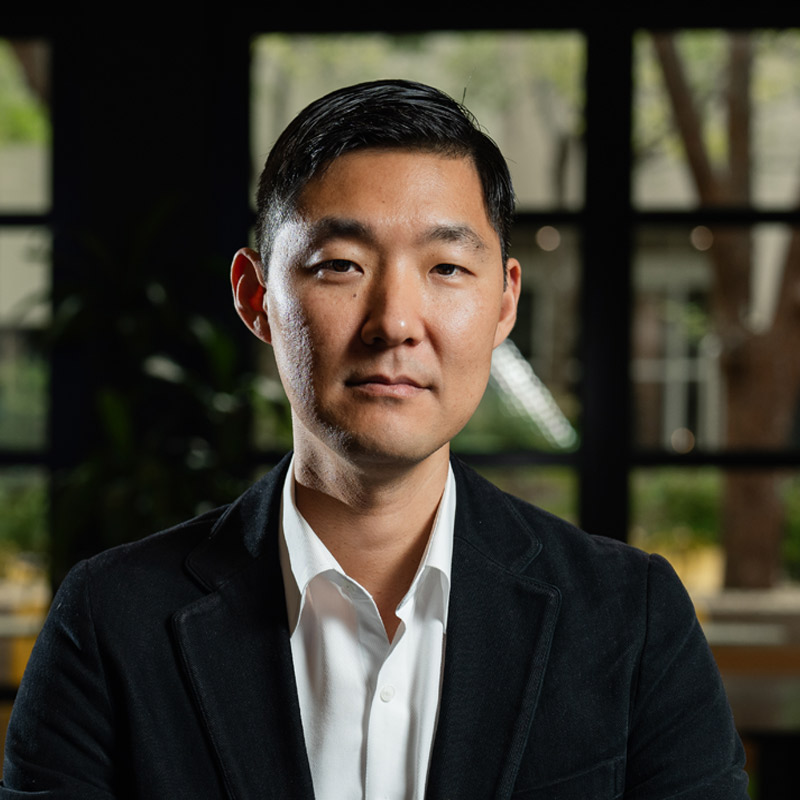
Daisung Jang
Assistant Professor

Part-time MBA
Management
Part-time MBA
A flexible, top-ranked MBA with study options that make it easier than ever to get started.

