Senior Executive MBA
The only global MBA in Australia exclusively designed for senior executives.
Senior Executive MBA Program Overview
Get a truly global experience with an MBA with Australia’s premier business school.
Embark on immersive educational experiences in Melbourne, Asia, Europe, and North America — exploring cutting-edge innovations shaping today's global business landscape.
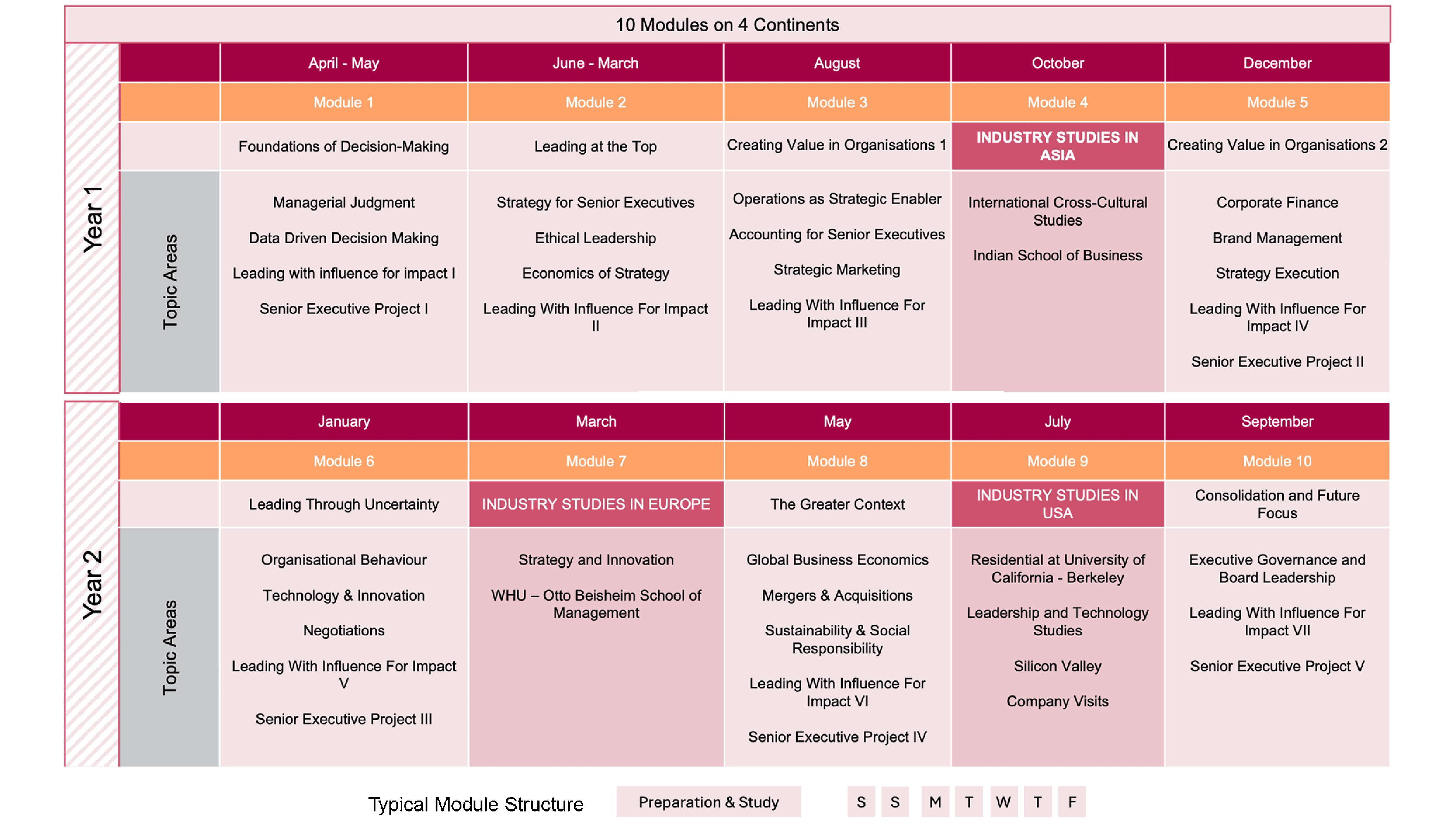
The unique program structure maximises your learning while minimising disruption to your career and personal commitments. Spread over 18 months, each of the ten modules runs for seven days, covering a wide range of high-impact leadership skills. We welcome leaders from across Australia and overseas to apply.
Join a lasting and influential community of internationally-renowned faculty and senior executives from world leading organisations operating at the highest level, united by a motivation to succeed.
Why a Senior Executive MBA at Melbourne Business School?
Unlike Any Other
World-leading Faculty
Global Immersion
Australia’s Most Influential Network
Access Global Business Hubs

Europe
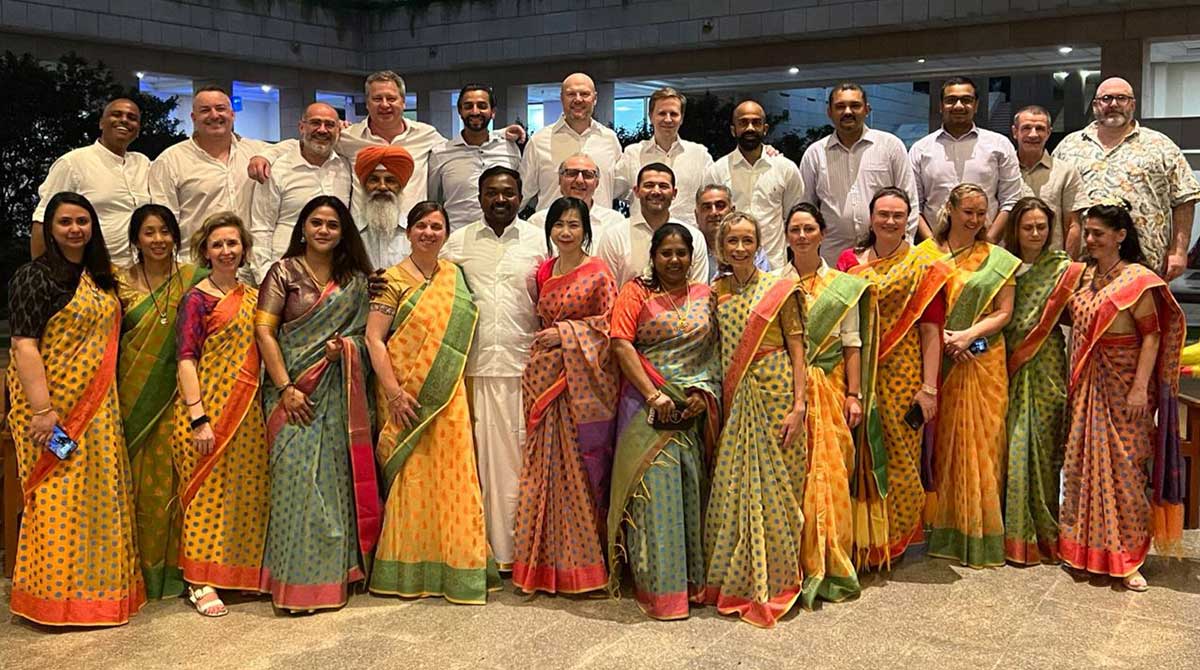
Asia
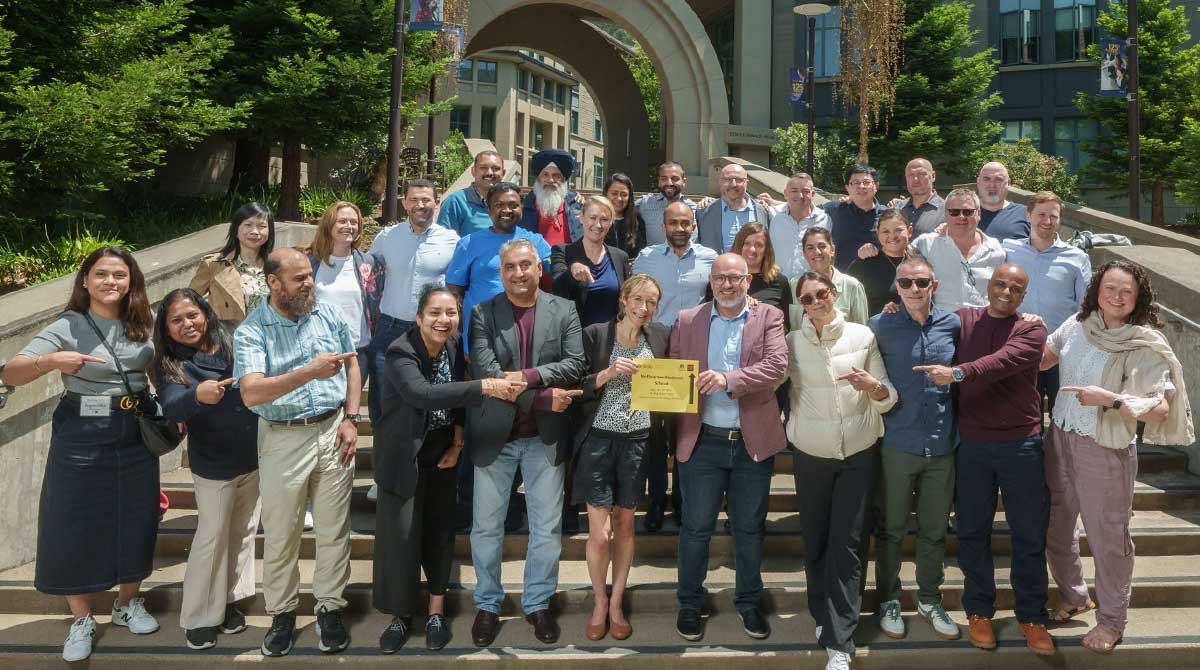
USA


Student Experience
People come to Melbourne Business School because they want to study with the best.
We attract some of the brightest academics from around the world, who teach in class sizes much smaller than their colleagues overseas and are accessible to you throughout your studies.
You will have access to a private serviced room with an ensuite on-campus for the duration of each module.
We offer opportunities for self-development via a wide range of electives, co-curricular activities, and host regular industry networking events.
Success Stories

“It helped me see how we can do things differently, how to define our value proposition in ways that actually resonate with people, not just sounding clever.”MATT EVERITT

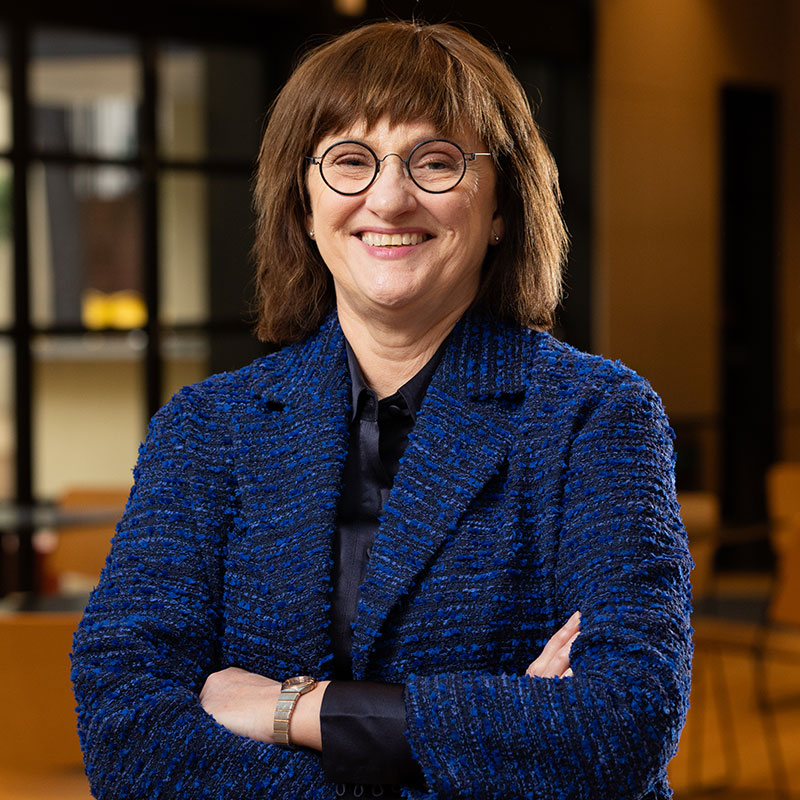
“My only regret is I did not do this sooner. Jump in - Just do it.”CHERYL MARTIN
What You'll Study
Revolutionise the way you think about business, your career and your future.
Business Skills
Strategy
Global Awareness
Problem-solving
Decision Making
Self-confidence
Adaptability
Subjects and Structure
Foundations of Decision-Making
Managerial Judgement
Leaders often face cognitive biases that can impede effective decision-making. Drawing on leading research, this module will help executives develop a more accurate understanding of others, recognise the biases influencing their decision-making processes, and grasp the impact of emotions - both positive and negative - on leadership decisions.
By honing these skills, you will be equipped to frame strategic challenges effectively, evaluate information to make informed choices, and lead with emotional intelligence to foster alignment and drive organisational success.
Data Driven Decision-Making
Data plays a crucial role in modern businesses and senior executives need to use it effectively to make decisions that ensure organisational success. To leverage data, executives must develop a proficiency in data analysis. This includes the ability to evaluate likelihoods, manage uncertainties, interpret statistical insights, and critically assess visualisations - key skills required to solve complex challenges and make sound decisions.
Through data-driven decision-making, executives can apply proven theories and frameworks from real-world business cases, allowing them to tackle pertinent issues within their organizations with greater accuracy and strategic foresight.
Leading with Influence for Impact I
Effective leadership is central to driving organisational success, particularly in times of transformation or uncertainty. Senior executives must not only provide direction, alignment, and commitment but also demonstrate courage, visibility, and approachability. This subject is designed to refine your leadership capabilities by enhancing your self-awareness, improving relationships through communication, while honing your leadership presence in team settings. You will learn to assess the nature of change and its organisational implications, ensuring you can lead with confidence and insight through complex transitions.
In this module, you will focus on yourself as leader and your role within the leadership process. You will undertake a leadership diagnostic to understand your areas of strength and areas for leadership capability development for you to focus upon throughout the program. Situating yourself as leader within the leadership process will provide a clearer roadmap for developing your leadership strengths. To enable this, we critically unpack prevailing leadership models and approaches.
Senior Executive Project I
This subject offers an action-learning opportunity where senior executive MBA students conduct research and provide consulting for their own or another organisation, addressing a current global issue. It provides an opportunity to engage with and practically apply the subject matter from across the various modules, synthesising their interdisciplinary learning towards tangible real-world outcomes. Each cohort will focus on a specific, high-impact theme - such as ESG or AI - ensuring a deep, interdisciplinary exploration of a strategic challenge. The subject is delivered through structured sessions, with key deliverables due at various points throughout the course. Emphasising collaboration with alumni and industry partners, students will engage with guest speakers and project mentors, enriching the learning experience and fostering connections to enhance the project’s impact. In this module, we set the foundation for the project by addressing topics essential for project delivery including project scoping, diagnosing organisational problems through data and insights, assessing organisational readiness for change and presentation skills.
Residential Stay
The program consists of 10, seven-day modules, including five business days based at Melbourne Business School and three overseas. During the modules at Melbourne Business School, students will stay on campus from Saturday to the following Sunday.
This format lets students fully immerse themselves in the program, without the distractions of work and home. All students receive a private room with en suite, and all meals are provided.
Leading at the Top
Strategy for Senior Executives
As a senior executive, playing a pivotal role in shaping strategy is crucial for strengthening the competitive advantage of your organisation. Developing an effective strategy involves aligning the efforts of various functional areas to determine the optimal products, markets, and segments for long-term success. This subject will equip you with the strategic frameworks and tools to assess your company’s internal resources and capabilities, analyse external market conditions, and identify the factors that drive sustainable competitive advantage. By leveraging these insights, you will be empowered to make high-level strategic decisions that ensure your organisation remains agile, competitive, and positioned for growth in dynamic environments.
Ethical Leadership
Organisations function within a broader societal framework, making it essential for leaders to navigate the ethical challenges that emerge. Leaders must understand their responsibilities to various stakeholders, develop effective social responsibility strategies, and apply robust moral reasoning to address the ethical issues that arise. This subject will equip senior executives with the tools to apply various ethical frameworks, recognise their limitations, build sustainable social responsibility initiatives, resolve ethical dilemmas, and understand how ethical considerations directly influence stakeholder behaviours.
Economics of Strategy
Some entrepreneurs and top managers are driven by a strong vision and intuition about which strategic choices are correct for their firm. Even for these leaders, making the right decisions to guide the company along the intended path requires anticipating and evaluating the consequences of various strategic alternatives, for which a solid understanding of the market forces is essential. Economics provides frameworks and a set of tools that help an executive manager develop and evaluate strategic options and make the right choices. Economics of strategy borrows from microeconomic theory concepts and techniques that enable a decision-maker to evaluate his or her strategic position, seek out new opportunities, and make fact-based, educated conjectures about their likely success. Our focus will be on decisions at the individual business unit level that aim at advancing a firm’s market position. We discuss a wide range of strategic issues the modern firm faces in its endeavour to establish and maintain profitability in a competitive and rapidly changing environment.
Leading with Influence for Impact II
Effective leadership is central to driving organisational success, particularly in times of transformation or uncertainty. Senior executives must not only provide direction, alignment, and commitment but also demonstrate courage, visibility, and approachability. This subject is designed to refine your leadership capabilities by enhancing your self-awareness, improving relationships through communication, while honing your leadership presence in team settings. You will learn to assess the nature of change and its organisational implications, ensuring you can lead with confidence and insight through complex transitions. Extending from the previous module, to develop a deeper understanding of the leadership process, we will focus on sources of power and how that power can be translated into influential actions that create impact for individuals, teams and organisations.
Creating Value in Organisations 1
Operations as Strategic Enabler
In today’s highly competitive global marketplace, organisations must strategically align their operations to exceed expectations in key areas such as cost, quality, flexibility, and innovation. For senior executives, this requires the ability to design, manage, and continuously refine operational processes to build sustainable competitive advantages. In this subject, you will learn to evaluate and address bottlenecks, develop effective response strategies, and optimise inventory management to enhance overall performance. This subject will empower senior leaders with the skills to assess process consistency, determine appropriate safety stock levels, identify sources of operational inefficiency, and apply advanced statistical techniques to improve process capabilities. By integrating operational excellence with strategic goals, executives will position their organisations for long-term success and value creation.
Accounting for Senior Executives
Accounting information is a fundamental driver of executive decision-making. As a senior executive, understanding financial statements is essential for making informed decisions regarding your organisation’s operating, investing and financing activities and for assessing your organisation’s strengths, weaknesses and overall value. Into addition to providing frameworks for accounting issues that every senior executive should understand, this subject will also equip you with the skills to read and interpret key sections of financial statements relevant for senior executives and to evaluate financial performance. This subject will enhance both your understanding of your organisation’s operations and your ability to make strategic business decisions, while also developing a deeper understanding of the complexities and challenges inherent in financial leadership.
Strategic Marketing
To achieve long-term success, organisations must recognise, develop, and protect market-based assets, such as brand equity and stakeholder relationships. In this subject you will be equipped with the skills to analyse market opportunities, build brand equity, strengthen stakeholder relationships, and optimise channel support to drive organisational success. You will gain expertise in the three essential aspects of marketing – analysing and understanding markets; crafting marketing strategy; and developing actionable marketing plans. As part of this, you will learn how to segment and target markets effectively, employ brand positioning strategies, and leverage advanced marketing techniques to drive organisational growth and competitive advantage.
Leading with Influence for Impact III
Effective leadership is central to driving organisational success, particularly in times of transformation or uncertainty. Senior executives must not only provide direction, alignment, and commitment but also demonstrate courage, visibility, and approachability. This subject is designed to refine your leadership capabilities by enhancing your self-awareness, improving relationships through communication, while honing your leadership presence in team settings. You will learn to assess the nature of change and its organisational implications, ensuring you can lead with confidence and insight through complex transitions.
In this module, we address the essential skills and capabilities that leaders require to be effective communicators. Storytelling is a chief way for senior leaders to inspire and influence others and we will our attention to how to craft a compelling narrative when seeking to influence others towards impactful outcomes.
Creating Value in Organisations 2
Corporate Finance
Valuation and financial management are critical to any executive role where cash flow is a key driver, underpinning strategies to optimise firm performance and enhance shareholder value. This subject provides senior leaders with advanced insights into valuing financial assets and selecting investment projects, with principles that are directly applicable to both corporate strategy and personal financial decision-making.
You will learn to evaluate the cash flows of investment projects, financial assets such as bonds and shares, and make strategic decisions on which projects to pursue and finance, all aimed at increasing firm value while managing cash flow risks. Advanced financial management techniques will equip you to effectively fund investments, utilise resources efficiently, and manage high-risk situations.
This subject will enable you to identify and assess various risks, evaluate capital investments in foreign markets, and refine your understanding of capital structure and corporate payout policies. These insights will enhance your ability to make strategic, informed decisions that drive long-term growth and value creation.
Brand Management
Brand equity represents a substantial portion of an organisation’s total value, making its management a critical focus for senior executives and investors. In this subject, you will explore the dynamics of brand management, learning how leading brand-driven organisations design and execute strategies to build, maintain, and leverage brand equity. You will gain insights into how the role of a brand evolves in response to economic shifts, and how to effectively take a brand to market, optimise brand architecture, and drive brand value.
Through this subject, you will develop the skills to manage a brand strategically, enhancing organisational performance and leveraging the relationship between brand equity and firm value to make informed, high-impact decisions.
Strategy Execution
After contributing to the formulation of strategy, senior executives must focus on its effective execution to achieve organisational goals. This subject will equip you with the tools to execute strategic initiatives, incorporating systems thinking, fostering innovation, maintaining a sustainable competitive advantage, leading organisational transformation, and managing corporate culture. You will deepen your understanding of the key challenges involved in strategy execution, gain proficiency in the frameworks and methodologies necessary for successful implementation, and learn how to drive change to ensure organisational renewal. Additionally, you will strengthen your strategic leadership capabilities to navigate the complexities of execution and sustain long-term business success.
Leading with Influence for Impact IV
Effective leadership is central to driving organisational success, particularly in times of transformation or uncertainty. Senior executives must not only provide direction, alignment, and commitment but also demonstrate courage, visibility, and approachability. This subject is designed to refine your leadership capabilities by enhancing your self-awareness, improving relationships through communication, while honing your leadership presence in team settings. You will learn to assess the nature of change and its organisational implications, ensuring you can lead with confidence and insight through complex transitions.
In this module, we explore the critical link between reputation management and personal branding, offering you the tools to craft, enhance, and protect your professional image as a responsible leader and your organisation’s reputations. You will gain insights into how personal values, consistent messaging, and strategic actions shape perceptions both inside and outside the organisation.
Senior Executive Project II
This subject offers an action-learning opportunity where senior executive MBA students conduct research and provide consulting for their own or another organisation, addressing a current global issue. It provides an opportunity to engage with and practically apply the subject matter from across the various modules, synthesising their interdisciplinary learning towards tangible real-world outcomes. Each cohort will focus on a specific, high-impact theme - such as ESG or AI - ensuring a deep, interdisciplinary exploration of a strategic challenge.
The subject is delivered through structured sessions, with key deliverables due at various points throughout the course. Emphasising collaboration with alumni and industry partners, students will engage with guest speakers and project mentors, enriching the learning experience and fostering connections to enhance the project’s impact.
In this module, students will pitch their proposed projects for feedback from faculty, industry advisors and peers. The focus will be on assessing project viability and feasibility as well as how to improve on their presentation skills.
Leading Through Uncertainty
Organisational Behaviour
Effective leadership requires an understanding of organisational behaviour and strategic human capital management to drive organisational performance and achieve sustainable competitive advantage. Senior executives must make informed decisions that optimise employee potential, leveraging best practices in people management to address challenges and seize opportunities. This requires developing an organisational culture and human capital strategies that foster employee engagement, trust, and thriving. In this subject, you will learn to diagnose people-related issues, adapt best practices to maximise engagement, and cultivate relationships that enable effective team leadership and conflict resolution, ultimately driving organisational success.
Technology & Innovation
This subject explores the intersection of strategy, technological advancement, and innovation in shaping organisational success. This subject equips senior leaders with the knowledge and tools to develop and implement strategies that leverage technological change and foster innovation within their organisations. It delves into key concepts such as disruptive innovation, digital transformation, and competitive advantage in the context of emerging technologies. Through case studies, strategic frameworks, and practical applications, students will learn how to navigate the complexities of integrating technology into business models, drive innovation, and stay competitive in dynamic, technology-driven markets. The subject emphasises leadership decision-making, aligning technological initiatives with long-term strategic goals, and fostering an organisation that embraces continuous innovation for sustained growth.
Negotiations
Negotiation is an interpersonal decision-making process that can secure valuable agreements. This subject will build on your existing negotiation experience, by providing you with a vocabulary and a framework to critically evaluate negotiation situations. These will help you to gain confidence, make informed strategic decisions, and use tactics that will create the conditions for optimal outcomes across a range of negotiation scenarios.
You will learn ways to create value in negotiations, manage personal and interpersonal dynamics, leverage power effectively, navigate multi-party negotiations, and manage conflicts. This subject will equip you to make better deals and foster stronger relationships across all levels of an organisation.
Leading with Influence for Impact V
Effective leadership is central to driving organisational success, particularly in times of transformation or uncertainty. Senior executives must not only provide direction, alignment, and commitment but also demonstrate courage, visibility, and approachability. This subject is designed to refine your leadership capabilities by enhancing your self-awareness, improving relationships through communication, while honing your leadership presence in team settings. You will learn to assess the nature of change and its organisational implications, ensuring you can lead with confidence and insight through complex transitions.
To be impactful, leaders must be able to successfully navigate change within a volatile, uncertain, complex and ambiguous world. In this module, we will explore the unique challenges of leading in a VUCA environment. You will learn how to lead with clarity, drive transformation and inspire teams in the face of constant disruption and crises.
Senior Executive Project III
This subject offers an action-learning opportunity where senior executive MBA students conduct research and provide consulting for their own or another organisation, addressing a current global issue. It provides an opportunity to engage with and practically apply the subject matter from across the various modules, synthesising their interdisciplinary learning towards tangible real-world outcomes. Each cohort will focus on a specific, high-impact theme - such as ESG or AI - ensuring a deep, interdisciplinary exploration of a strategic challenge.
The subject is delivered through structured sessions, with key deliverables due at various points throughout the course. Emphasising collaboration with alumni and industry partners, students will engage with guest speakers and project mentors, enriching the learning experience and fostering connections to enhance the project’s impact.
In this module, students will delve deeper into how their project will create value for the organisation, drawing from the learning from prior modules, with a focus on budgeting and financing their projects.
The Greater Context
Global Business Economics
A strong understanding of economics is crucial for senior executives to make informed decisions and navigate the ever-changing environment. By grasping key economic concepts, executives can form independent perspectives on economic issues, empower their decision-making, and engage effectively with economists across various contexts. This subject will provide you with a solid foundation in economic terminology and equip you with the tools to analyse economic policy, understand the factors driving long-term growth and short-term GDP fluctuations, assess business cycle dynamics, and comprehend the motivations behind central bank monetary policy, among other essential topics. This knowledge will enhance your ability to lead strategically in complex economic landscapes.
Mergers & Acquisitions
Mergers and acquisitions have been a critical growth strategy for large organisations, remaining a key avenue for achieving strategic objectives. Mergers and acquisitions enable companies to pursue a wide range of goals, including market expansion, enhanced operational efficiencies, improved logistical capabilities, and portfolio diversification. In this subject, you will explore the historical evolution of mergers and acquisitions, gain insights into the key elements that drive successful transactions, and understand the strategic rationale behind ongoing M&A activity. Additionally, you will examine the regulatory landscape and its influence on deal structures, equipping you with the expertise to navigate and lead M&A initiatives effectively.
Sustainability and Social Responsibility
This subject focuses on the role senior executives must play in integrating sustainable practices and ethical considerations into broader organisational strategy and operations. This subject equips senior leaders with the knowledge and skills to lead organisations towards positive social, environmental, and economic impact. This subject covers global sustainability challenges, including climate change, resource management, and social inequality, and provides frameworks for addressing these issues through innovation and strategic change. You will learn how to balance profit motives with the responsibility to stakeholders and society, ensuring long-term organisational success while contributing to a more sustainable and equitable world. Emphasising leadership in driving change, the subject prepares you to champion sustainability within their organisations, influence stakeholders, and create value that benefits both business and society.
Leading with Influence for Impact VI
Effective leadership is central to driving organisational success, particularly in times of transformation or uncertainty. Senior executives must not only provide direction, alignment, and commitment but also demonstrate courage, visibility, and approachability. This subject is designed to refine your leadership capabilities by enhancing your self-awareness, improving relationships through communication, while honing your leadership presence in team settings. You will learn to assess the nature of change and its organisational implications, ensuring you can lead with confidence and insight through complex transitions.
In this module, we will develop an understanding of how complex systems function within organisations and explore systems thinking to identify patterns and leverage points that drive growth and innovation. By applying systems thinking to organisational challenges and developing strategies for effective change management you will enhance your decision-making capabilities, foster collaboration, and navigate complexity to drive transformation.
Senior Executive Project IV
This subject offers an action-learning opportunity where senior executive MBA students conduct research and provide consulting for their own or another organisation, addressing a current global issue. It provides an opportunity to engage with and practically apply the subject matter from across the various modules, synthesising their interdisciplinary learning towards tangible real-world outcomes. Each cohort will focus on a specific, high-impact theme - such as ESG or AI - ensuring a deep, interdisciplinary exploration of a strategic challenge.
The subject is delivered through structured sessions, with key deliverables due at various points throughout the course. Emphasising collaboration with alumni and industry partners, students will engage with guest speakers and project mentors, enriching the learning experience and fostering connections to enhance the project’s impact.
In this module, we focus on how to communicate strategically, within and outside of the organisation and how this can be translated to your project and gain the necessary traction for your strategic initiatives.
Consolidation and Future Focus
Executive Governance and Board Leadership
This subject focuses on equipping senior executives with the knowledge and skills necessary to lead with effectiveness and integrity in senior leadership roles, particularly within the boardroom. You will learn to apply best practices in corporate governance to align governance principles with strategy and performance goals, ensuring that your organisation operates efficiently and ethically. The subject will explore contemporary issues affecting the duties of officers and directors, with an emphasis on their legal and governance implications in Australia and abroad.
The subject will also provide you with the tools to analyse board structures and decision-making processes, enabling you to lead executive teams that drive high-level, strategically aligned decisions. Through these insights, you will enhance your capacity for leadership at the highest levels, ensuring sustainable success for your organisation.
Leading with Influence for Impact VII
Effective leadership is central to driving organisational success, particularly in times of transformation or uncertainty. Senior executives must not only provide direction, alignment, and commitment but also demonstrate courage, visibility, and approachability. This subject is designed to refine your leadership capabilities by enhancing your self-awareness, improving relationships through communication, while honing your leadership presence in team settings. You will learn to assess the nature of change and its organisational implications, ensuring you can lead with confidence and insight through complex transitions.
In this module you will identify your future roadmap for your leadership journey through understanding how to avoid irresponsible leadership along the way and bounce back from setbacks. You will gain insights on how to lead with accountability, stay aligned with your core values, and turn challenges into opportunities for growth. Working with industry mentors, you will refine your leadership brand and narrative for your future leadership roadmap, culminating in a presentation on your leadership journey to-date and action plan for your career.
Senior Executive Project V
This subject offers an action-learning opportunity where senior executive MBA students conduct research and provide consulting for their own or another organisation, addressing a current global issue. It provides an opportunity to engage with and practically apply the subject matter from across the various modules, synthesising their interdisciplinary learning towards tangible real-world outcomes. Each cohort will focus on a specific, high-impact theme - such as ESG or AI - ensuring a deep, interdisciplinary exploration of a strategic challenge.
The subject is delivered through structured sessions, with key deliverables due at various points throughout the course. Emphasising collaboration with alumni and industry partners, students will engage with guest speakers and project mentors, enriching the learning experience and fostering connections to enhance the project’s impact.
In this final module, students will present the outcomes of their project to faculty, industry mentors and peers, receiving feedback on the process and findings of their work.
Industry Studies
Industry Studies in Asia
Industry Studies in Asia is a field study-based subject that allows students to apply the skills they have developed in the core subjects of the MBA program. The main deliverable in the subject is a detailed, highly-integrated research report describing a consulting study in one of the developing markets of Asia. The field study (or project) can focus on a specific organisation, new or existing products, services or ventures, or entire industries. Students may also develop in detail a specific topic of business such as marketing, finance or innovation.
Industry Studies in America
Industry Studies in America (ISAm) is a 7-day field study subject based in the United States of America. This subject leverages multiple topics covered in prior subjects to analyse and understand American business models and success factors relative to other global approaches and experiences. ISAm involves a series of lectures and seminars at a partner business school, field visits to US businesses and public institutions (e.g. high-technology companies, venture capital organisations, innovation incubation units) and comparative analyses of American and other business models.
Industry Studies in Europe
Industry Studies in Europe (ISE) is a 7-day field study subject based in Europe. This subject leverages multiple topics covered in prior subjects to analyse and understand European business models and success factors relative to other global approaches and experiences. ISE involves a series of lectures and seminars at a partner business school, field visits to European businesses and public institutions (e.g. European Central Bank) and comparative analyses of European and other business models.
World-Leading Faculty
 Associate Professor Dr Andrea North-Samardzic
We invite you to join an exclusive network of visionary CEOs, senior executives, and world-class academic leaders. Together, we'll challenge conventional thinking delve into groundbreaking innovations that are transforming the global business ecosystem.
DR ANDREA NORTH-SAMARDZIC
Associate Professor
Associate Dean Executive Degree Programs




Employee Sponsorship

Many of our students secure partial or full financial support from their employers for our MBA programs.
This investment not only demonstrates your commitment to your organisation but also provides immediate value through enhanced leadership skills and an expanded professional network.
Ready to discuss the opportunity with your company? Contact our Future Learners team for our comprehensive business case template and personalised guidance.
Enquire NowMeet With Us
The best way to learn more about studying at Melbourne Business School is to attend an upcoming information session or book a one-on-one conversation with our recruitment team.
We hold sessions monthly, providing a comprehensive overview of everything you need to know about the program, along with an opportunity to participate in a group Q&A session. After this, if you need more specific information on subjects and study materials, campus life or assistance with your application, please book a one-on-one session. We are available to meet in person at our Carlton Campus or online.




Investment
Program Fee
The Senior Executive MBA program fee is $163,136 (2027 intake), inclusive of tuition fees: $148,680 and residential fees: $14,456.
Residential fees include:
- Residential accommodation (in Melbourne and overseas) for the duration of the program
- Meals on class days
Other Costs
The program fee does not include travel costs associated with the international modules, including airfares to Asia, Europe and the US, airport transfers, visa charges and travel insurance. Students are also responsible for some meals on class days of the international modules, as well as incidental expenses such as telephone, laundry, car parking and other personal charges.
Students located outside Melbourne are responsible for their own travel costs to and from Melbourne for modules based at Melbourne Business School.
FEE-HELP
FEE-HELP is available for tuition fees to eligible Australian citizens and certain permanent residents.
Self-financing
Company Sponsorship
Many students share the cost of studying with their employer. Melbourne Business School is happy to provide a business case to share with your employer about the benefits of studying a Senior Executive MBA to the organisation. Please contact us for more information.
Scholarships
A small number of partial scholarships are available for the Senior Executive MBA program.
Our scholarships encourage diversity, provide opportunity and reward talent.
You will automatically be considered for a scholarship when you apply – but to be eligible for some, you need to apply by a certain date.
For more information, visit our Scholarships page.
Entry Requirements
Admissions Criteria
To be considered for entry into this course, you must have:
- An undergraduate degree*, AND
- At least ten (10) years of documented full-time management work experience.
*Applicants without formal tertiary qualifications should contact us to discuss alternative entry criteria.
You must submit:
- An up-to-date curriculum vitae (CV)
- Four personal statements relating to your goals and how you can contribute to the program
- Evidence of all qualifications completed and incomplete including academic transcripts with grading schema.
- A valid passport or verified document showing current citizenship / residency status
- The names and contact details of two professional referees
Please note: this program is not available to international students who require a student visa to study in Australia as it does not meet the onshore study requirements and is not registered with CRICOS.
English Language Requirements
All applicants to the University of Melbourne must satisfy the English language requirements. This may be achieved in a number of ways, including recognised previous study taught and assessed entirely in English or an approved English language test. If you need to undertake an English language test, you must meet one of the scores below:
- IELTS (Academic English only): Overall score of 7.0 (with no individual band less than 6.5).
- TOEFL Internet-based test: Overall score of 91 (with writing 23; speaking 22; reading 19; listening 19).
- Pearson Test of English Academic (PTE): Overall score of 72 (with writing 65; speaking 66; reading 64; listening 64).
- Cambridge C1 Advanced: Overall score of 178 (with writing 180; speaking 187; reading 168; listening 168).
- LanguageCert Academic: Overall score of 73 (with writing 71; speaking 76; reading 65; listening 62).
- Michigan English Test (MET): Overall score of 62 (with writing 64; speaking 53; reading 59; listening 59).
About Selection
When assessing applications, the Selection Committee will consider your previous studies, academic performance, professional history, references and your personal statements. The Selection Committee may request additional information to clarify any aspect of an application, according to the University’s Academic Board rules regarding selection instruments. You are also welcome to supply additional information that you believe will strengthen your application.
Meeting the published entry requirements for this course does not guarantee selection.
If your application is shortlisted, you will be invited to attend an interview, which will also be used to assess your application.
Additional Information
It is a university requirement that applicants provide evidence that they meet the published entry requirements. Uncertified documentation does not provide this evidence; however, we accept uncertified documents for the purpose of selection and reserve the right to request your original certified documentation at any time.
Frequently Asked Questions
For more information about entry requirements, applications, scholarships, international study and program options, ask our MBS chatbot or visit our Degree Programs FAQ's page.
For personalised advice, you can also contact our Recruitment Team:
p: +61 3 9349 8200
e: [email protected]
How to Apply
Application Process
Apply
- Meet with us to find out more about the School and program.
- Review entry requirements and eligibility.
- Gather your supporting documentation.
- Submit your application by the application closing date.
After you apply
All communications related to your application, including requests for additional information and application outcomes, will be sent to the email address you registered for your application. We may also contact you by phone if needed. To avoid delays, please upload requested information as soon as possible.
Interview
Shortlisted applicants for each round will be invited to attend a compulsory interview conducted online or in person on campus (at request). The interview will last approximately 20 to 30 minutes.
Outcome
The Selection Committee reviews all applications and makes the final decision. Outcomes are typically provided via email within four (4) weeks of receiving a complete application.
Application Deadlines
Closing dates for the Senior Executive MBA program (2027 intake) are as follows:
Round 1: 17 August 2026
Round 2: 12 October 2026
Round 3: 7 December 2026
Round 4: 8 February 2027
The deadline for all applications is 11.59pm AEST.
Late applications may be considered on a case-by-case basis. Please contact us for further advice.
Apply Now
Program Enquiry
Fill out the form below with details of your enquiry and our team will respond to your request within three business days,
or call us on +61 3 9349 8200 or email [email protected]. Read our Privacy Policy.
Related Programs and Courses

Executive MBA
Management
Executive MBA
A focused and residential MBA program that prepares high-performing professionals for significant leadership roles.
Advanced Management Program
Senior Management
Advanced Management Program
Boost your effectiveness as a senior executive with an integrated view of you, your organisation and the future.

The MBS CEO Program
CEO Suite
The MBS CEO Program
Build a strong foundation as a CEO to drive a high performing organisation.

General Management Program
Senior Management
General Management Program
Improve the way you manage day-to-day business while building resilient teams and implementing strategic direction.