From Emergency Medicine to Executive Influence: Redesigning Care at Scale

How an emergency physician turned systems leader is building safer, more human healthcare—one team, one idea, one step at a time.
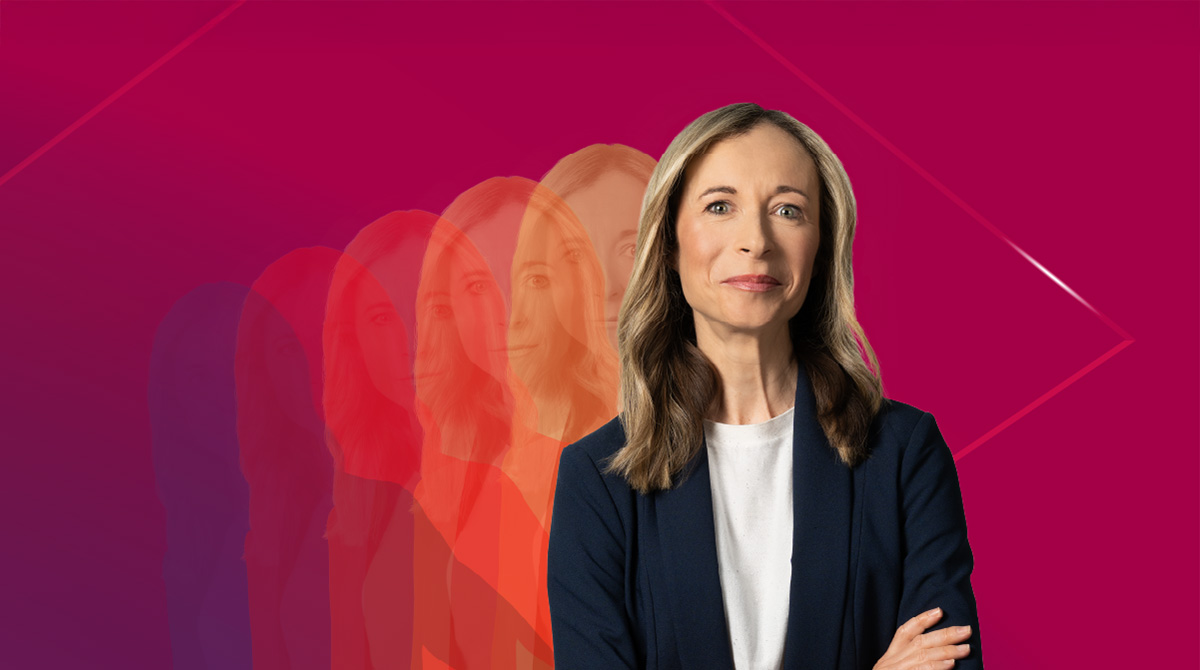
- Name: Dr Cheryl Martin
- Current Role: Medical Doctor (Emergency Medicine, Occupational Health, Regulation, Organisational Wellbeing and Safety)
- Program: Senior Executive MBA, Melbourne Business School
- Cohort: 2023–2024
Healing the System, Not Just the Patient
In the emergency department - the safety net of the entire health system - Dr Cheryl Martin has spent two decades meeting people on some of the hardest days of their lives. Trained as a specialist emergency physician, she has worked across public and private hospitals, metro and regional settings, internationally and across four Australian states.
Alongside her clinical career, Cheryl cultivated a second passion: the wellbeing, psychological safety, and effectiveness of the clinicians delivering care. “The ED is there 24/7 for people in crisis — but when systems strain, clinicians feel it too. That’s where moral injury creeps in.”
Moral injury describes the distress clinicians experience when they know the right course of action for a patient but are prevented from taking it - often by resource limits, bureaucracy, or systemic failures. It’s the emotional and ethical toll of being unable to provide the standard of care one believes in.
Witnessing the growing complexity of healthcare - from bed block to access delays - Cheryl began focusing not just on individual patients, but on the structures surrounding care. She started advocating for new models of practice and better support for staff wellbeing and performance.
A short course at Stanford on the emerging Chief Wellbeing Officer model crystallised her next step. To translate conviction into sustainable change, she realised she needed new tools — tools that would allow her to influence not just at the bedside, but at the executive table.
Why Melbourne Business School
Cheryl chose Melbourne Business School to intentionally step outside a healthcare-only lens. She wanted to learn what high-performing systems look like in other industries, and bring that back to health. “I didn’t want a healthcare MBA. I needed different perspectives, different tools, and peers who would challenge my thinking.”
MBS stood out for its senior cohort, international immersion, and culture of stretch and belonging. The SEMBA’s global modules took her to the Indian School of Business in Hyderabad, to Germany, and to the US at Berkeley - experiences that broadened her worldview and recharged her ambition to redesign how care teams thrive.
Inside the MBA Experience
The SEMBA’s cadence is purposeful: four weeks of pre-reading (around 15 hours weekly), then nine fully immersive days on campus, repeated ten times across the program. Cheryl’s cohort of around 28; lived, learned, and worked together at intensity, forming syndicates that mirrored real executive teams.
“You don’t have to know it all to lead. Your job is to hold the room, surface the best thinking, and help people do their best work.”
Finance stretched her. Strategy sharpened her. But the through-line was reflective practice. Each module culminated in rigorous reflection, including 5,000-word international write-ups that transformed academic learning into a practical leadership playbook she could apply immediately in healthcare.
If the classroom delivered concepts, Cheryl says the cohort delivered capability. The group’s diversity, in disciplines, cultures, and leadership styles, became an engine for shared growth. They still meet, mentor, and collaborate: from women-in-leadership events to board support and cross-industry problem-solving
“Vivek told us the real value was each other — and he was right. The network is the secret sauce.”
From Clinician to Systems Thinker
For Dr Cheryl Martin, transformation wasn’t about adding credentials — it was about expanding influence. The Senior Executive MBA stretched her well beyond clinical mastery into the language of strategy, finance, operations, and change. She learned to “see around corners,” reframing complex health-system problems with a broader set of tools and a sharper sense of risk, incentives, and trade-offs.
With this mindset, she now sees the entire continuum of care as a design challenge: one that demands financial literacy, data-driven reasoning, and the courage to re-engineer structures that no longer serve patients or staff.
Through global immersions, Cheryl experienced how other industries embed wellbeing, performance, and accountability within their operating models lessons she is now translating into hospital and regulatory environments.
“It taught me to hold both the micro and the macro in view,” she says. “To stay grounded in compassion, but lead with commercial clarity.”
Redesigning Care by Redesigning Culture
Cheryl’s impact isn’t a single headline; it’s a portfolio of outcomes that compound. Clinically, she is working on broadening her vantage point through occupational and regulatory roles - seeing the system from bedside to board table.
Cheryl’s portfolio career is now an ecosystem of influence spanning frontline care, regulation, and leadership. She is part of a national coalition focused on clinician wellbeing, psychological safety, and high-reliability teams - translating international evidence into local pilots and practical playbooks for Australian healthcare. “When clinicians can do their best work safely, patients get better care. That’s the outcome that matters.”
Beyond the hospital, she founded The Mind Full Medic podcast, a thought-leadership platform that connects global innovators like Professor Amy Edmondson and Dr Don Berwick with Australian practitioners hungry for change. The series has evolved into a professional community that bridges clinical insight with organisational design, spreading the message that wellbeing and performance are not opposites - they are interdependent levers of excellence.
Within her MBS cohort, she has catalysed cross-industry collaborations - alumni now sit on each other’s boards, swap expertise, and co-design solutions. Together, these achievements demonstrate Cheryl’s core strength: turning communities of practice into engines of progress.
For Future Students
For Cheryl, the MBA wasn’t a restart — it was a pivot: a deliberate expansion of impact.
After two decades in emergency departments, she could see that the system itself, not just the patient in front of her, was what needed care. Yet prior attempts to influence wellbeing, safety, or culture from within was met with the same barrier: the language of business. “I realised I could make the case emotionally, but not commercially. And in healthcare, that’s where decisions get made.”
Owning the pivot meant building fluency in the levers that drive systems — finance, governance, data, and strategy — so she could lead reform with authority. Equally, she says, the network endures long after graduation. “The cohort is the secret sauce. They’re the people who’ll challenge your thinking, sharpen your ideas, and remind you why you started.”
For Cheryl, reinvention is now a hallmark of senior leadership. “Owning the pivot isn’t about leaving what you know behind,” she reflects. “It’s about broadening your field of influence — and having the confidence to lead change where it matters most.”
Made. Not born. – Personal Interpretation
For Cheryl, leadership isn’t a destination - it’s a continuum of learning, reflection, and renewal. The MBA wasn’t a capstone to her career; it was a catalyst that re-energised her purpose and reframed how she sees her role in shaping the future of healthcare.
She views her transformation not as an endpoint but as a living journey, one that continues to evolve through research, policy influence, and mentoring the next generation of clinicians and system leaders. The program reaffirmed something she has always believed: that growth and humility can coexist, and that the privilege of leadership is the responsibility to keep learning.
“Made. Not born. reminds me that every step, every challenge, every insight, builds on the last,” she reflects. “I’m energised by what’s ahead. The work isn’t finished, and neither am I.”
Links:
The Mind Full Medical Podcast - Highlighted episodes with Dr Don Berwick, Mr Bob Chapman and Professor Amy Edmondson
https://podcasts.apple.com/au/podcast/the-mind-full-medic-podcast/id1513559414
https://podcasts.apple.com/au/podcast/the-mind-full-medic-podcast/id1513559414?i=1000680778549
https://podcasts.apple.com/au/podcast/the-mind-full-medic-podcast/id1513559414?i=1000613345905
The Creative Careers in Medicine Community - group invested in the improvement and future sustainability of healthcare for patients and clinicians.