Do you have what it takes to be a consultant?

Three Melbourne Business School alumni share the personality traits that make a great consultant and tips for getting into the trade.
Many MBA students aspire to work for a prestigious consulting firm after graduation.
A career in consulting can offer exposure to an interesting array of clients, global career opportunities, and attractive salaries.
But it’s not for everyone.
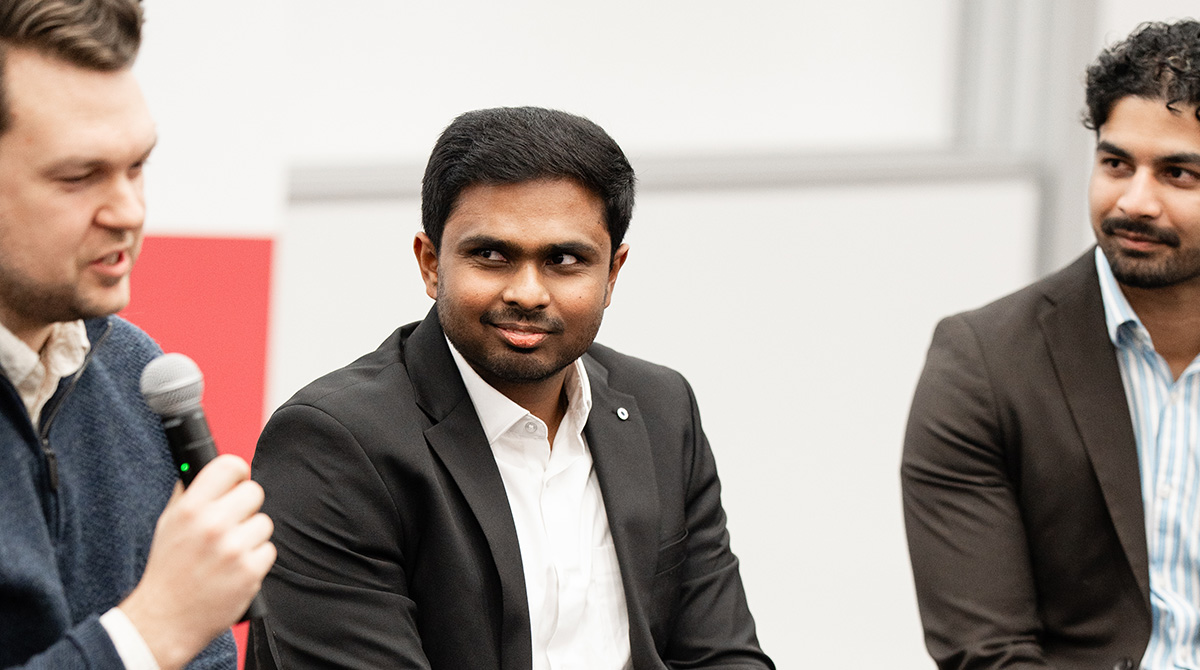
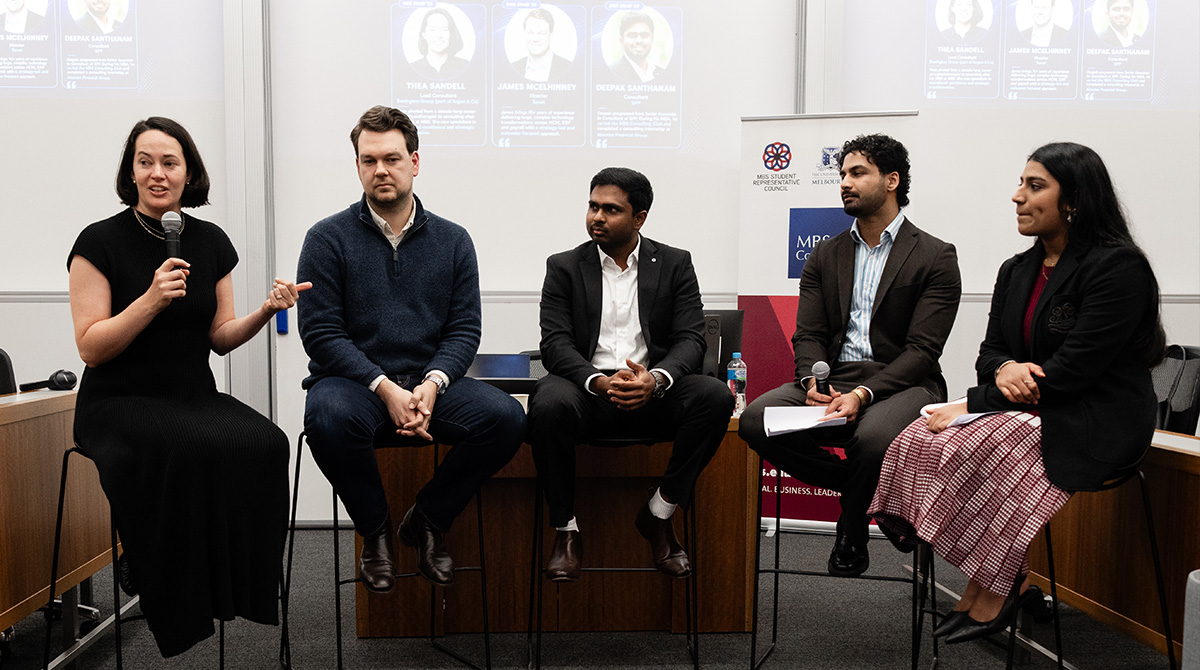
At the Melbourne Business School Consulting Club Event ‘Alumni Insights – Life After MBS,’ students and alumni heard firsthand from three people working in the industry.
The panel featured Thea Sandell (MBA 2024), Lead Consultant at the Bevington Group, James McElhinney (MBA 2025), Director of Tenet, and Deepak Santhanam (MBA 2025), Consultant with SPP.
The trio shared the realities of working in the industry, the three traits that make a great consultant, and their advice for breaking into the profession.
1. You’re a jack of all trades, master of none
Consultants work across a diverse range of industries and projects.
A common theme among the panel was that consulting was about breadth rather than depth, which doesn’t necessarily suit everyone.
“You get a lot of variety which some people really enjoy, but it means you’re not developing specialised knowledge in one thing which can make some people feel uncomfortable,” Thea said.
Deepak, who was newer to consulting after graduating from his MBA in 2025, agreed the churn of trying to learn different industries could sometimes be overwhelming but suited people with a thirst for knowledge.
“You have to be really curious, and it is usually more interesting for certain types of people but if you want to become an expert in one area, it’s probably not an industry for you,” he said.
The work also moves quickly, which suits people who enjoy moving at a fast pace.
“Some people might have preferences towards work that is more stable and predictable,” Thea said.

2. You’re a strong communicator
James said one of the most underrated qualities he sees in consultants coming up through the ranks is their ability to communicate.
“You want to build as much trust in your ability to your leaders, or whoever you’re working with, and that comes down to the most basic things like letting people know where you’re at and setting expectations with everyone around you,” he said.
Early on his consulting career James received feedback from his manager that he wasn’t providing visibility on his projects which created unnecessary anxiety.
“No update is an update. Now I’ll call the client I’m working with and just say ‘we wanted to let you know we’re waiting on X,Y,Z, and that builds trust that you’re on it.”
Thea backed this up, saying her background as a physiotherapist had helped her as a consultant to build trust with her clients. She regularly does FYI updates to communicate progress with partners.
“There's a lot of power in an FYI. I’ll send a Teams chat to the partner saying FYI, I’m doing this today and it doesn’t put pressure on them to answer a question or respond but they can see you’re across it,” Thea said.
3. You enjoy problem solving
Consulting suits people who thrive in ambiguity and like to solve problems.
“Every project is very different, every problem is very different, so you have to do a lot more thinking about every project that you do”, Deepak said.
He said most of the work was hypothesis driven. You start with an answer and then find data to support your answer.
“In terms of your broad skill sets, it’s unstructured problem solving, the way you build a narrative, communicate a narrative, and also project management,” Deepak said.
Thea said consulting also required creativity and thinking outside of the box.
One of the best aspects of being a consultant was that it was challenging.
“It's hard, which is what I want, I want to keep pushing myself,” Thea said.
“But there's also a team culture which is nice, there's people backing you up and supporting you, everyone wants it to be a success.”
Advice for people wanting to get into consulting
The panel said anyone who was curious, willing to learn and able to take feedback could become a consultant. Here were their top tips for those considering a career in consulting:
- Choose a boutique firm
“In a big organisation it can be very hard to move across different areas of the business. It would have taken me a lot longer to work with the seniority of stakeholder I do. At a boutique firm you’re getting so much more face time with C-Suite level executives and you can accelerate your career,” James said.
- Network at MBS events
“I met my employer at an event at MBS, and I actually got to meet them and chat with them which helped,” Deepak said.
- Listen more than you talk
“I failed at the initial few networking calls because I was trying to sell my skills and aggressively pitch for a job. But if you switch the mindset to learning from the person, you’ll get a lot more out of the conversation. I would approach it from that point of view where you are more interested in learning about their job and experience rather than trying to sell yourself,” Deepak said.
- Do your case preparation
“Use Case Coach or the Consulting Club’s buddy program, nothing beats good case practice when it comes to the interview side of it,” Deepak said.
- Confidence isn’t competence
“Women have a tendency not to apply for the job if they’re feeling uncertainty or to not speak up unless they have the perfect answer. One thing I like to do is reframe maybe I’m not feeling confident right now, but it doesn't mean I’m any less competent than I was yesterday. Try to say something at every meeting even if you don’t have the perfect answer, apply for jobs even if you feel like you don’t feel like it perfectly fits you, just apply anyway,” Thea said.
The MBS Consulting Club helps MBA students at Melbourne Business School explore careers in management and boutique consulting and supports those pursuing it with interview resources and guidance. Find out more here and follow the MBS Consulting Club on LinkedIn to find out about future events.
Events and Information Sessions
See all events, information sessions and alumni activities from the Melbourne Business School community.
Part-time MBA
Management
Part-time MBA
A flexible, top-ranked MBA with study options that make it easier than ever to get started.

Full-time MBA
Management
Full-time MBA
Australia's top-ranked MBA in an immersive format that will develop your full potential to succeed.

