
The Industrial Relations Negotiations Program
Strengthen your negotiation planning, stakeholder alignment, decision-making and execution within todayʼs legal and industrial relations environment.
The Industrial Relations Negotiations Overview
Enterprise bargaining is now more complex, visible and consequential for employers.
This program helps leaders and practitioners strengthen their negotiation planning, stakeholder alignment, decision-making and execution within todayʼs legal and industrial relations environment.
Delivered jointly by Herbert Smith Freehills Kramer and Melbourne Business School, it combines current IR insight with practical negotiation and executive learning expertise to help participants make better decisions and perform more effectively in high-stakes bargaining settings.
Who Should Attend The Industrial Relations Negotiations?
Industrial Relations and Employee Relations Practitioners
Industrial relations and employee relations practitioners, enterprise bargaining leads, and HR leaders with direct bargaining responsibility and what to:
- Build stronger capability in negotiation planning, stakeholder alignment, risk management and enterprise bargaining execution in today’s industrial relations environment.
Operational Leaders
Operational leaders, in-house legal advisers, workplace relations professionals, and senior decision makers who influence bargaining outcomes and what to:
- Develop a sharper understanding of bargaining dynamics, legal and strategic constraints, and the internal decisions that shape successful employer-side negotiations.
The Industrial Relations Negotiations Key Takeaways
Industrial Relations Reforms
- Understand how recent industrial relations reforms have reshaped bargaining dynamics and employer strategy.
Enterprise Bargaining
- Prepare more effectively for enterprise bargaining through stronger planning, stakeholder alignment and risk assessment.
Negotiation Frameworks
- Apply negotiation frameworks to complex two-level and multi-party industrial relations negotiations.
Bargaining Dynamics
- Manage bargaining dynamics across formal rounds, side conversations and internal mandates.
Systems Thinking
- Use systems thinking to interpret and respond to the complexity of enterprise bargaining.
Bargaining Thresholds, Trade-offs and Minimum Acceptable Outomces
- Assess bargaining thresholds, trade-offs and minimum acceptable outcomes with greater rigour.
Negotiation Strategy
- Adapt negotiation strategy across different phases of the bargaining process.
Signalling and Communication
- Use signalling and communication more deliberately in industrial relations negotiation contexts.
Topics Covered
Participants will explore the legal, strategic and behavioural dimensions of enterprise bargaining through a focused set of topics designed to build practical capability in high-stakes industrial relations negotiations.
The contemporary industrial relations landscape
Bargaining reform and the changing risk environment
Strategic planning for enterprise bargaining negotiations
Multi-party bargaining dynamics and complexity
Internal alignment, mandates and decision pathways
Negotiation simulation and practical debrief
Systems thinking in industrial relations negotiation
Negotiation strategy, signalling and influence
What You Will Learn

Recent industrial relations reforms have delivered to unions and employees a significant increase in bargaining power, and we are seeing that translate across industries into more ambit claims, less willingness to compromise, and more drawn-out negotiations.
In this program participants will learn how to prepare, manage complexity and apply negotiation strategy within todayʼs legal and industrial relations environment.

"Many employers send their negotiating teams for formal training on negotiation skills as part of their pre-bargaining planning, but we often hear feedback that this training can be light on how to apply the negotiating skills theory to the modern enterprise bargaining environment – particularly given the recent 'secure jobs, better pay' and 'closing loopholes' reforms. That's why we have created this course. It's designed to help employers improve their negotiating skills and support better outcomes for all parties."
ROHAN DOYLE, Partner (Industrial Relations) - Herbert Smith Freehills Kramer

The Learning Experience
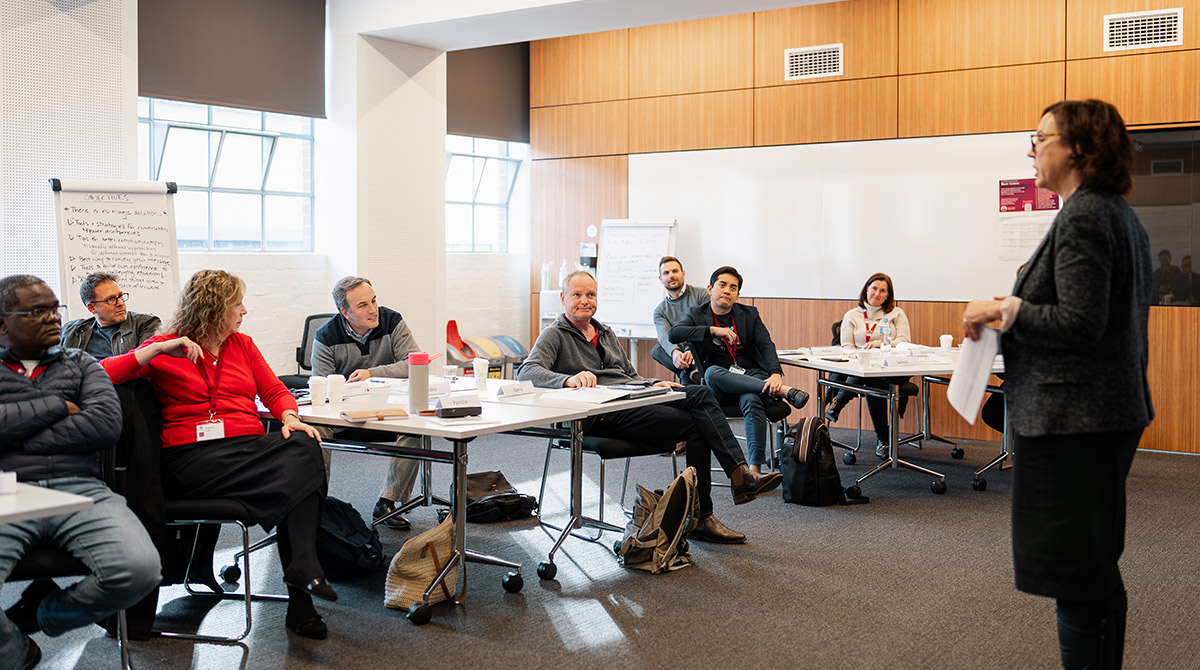
This program offers a practical and highly engaging learning experience, designed around the realities of contemporary enterprise bargaining.
Participants learn alongside peers facing similar industrial relations challenges, creating a valuable opportunity to test ideas, compare approaches and strengthen judgement in a complex and high-stakes environment. Delivered jointly by Melbourne Business School faculty and Herbert Smith Freehills Kramer practitioners, the program brings together negotiation science, executive learning and current industrial relations practice.
Through tailored case material, applied discussion, negotiation exercises and structured debriefs, participants work through the legal, strategic and behavioural dimensions of enterprise bargaining in ways that are directly relevant to their roles. Jen Overbeck A strong emphasis is placed on experiential learning and peer exchange. Participants engage in simulations, reflect on their own bargaining context, and learn in a confidential setting that supports candid discussion and practical application. The result is a learning experience that builds both conceptual understanding and the confidence to apply that learning in live bargaining situations.
Who Should Attend
This program is designed for participants with some exposure to negotiation, enterprise bargaining or related workplace and industrial relations matters. Candidates without prior training are provided a preparation module to support program readiness.
| Audience | Why they should attend |
|---|---|
| AudienceIndustrial relations and employee relations practitioners, enterprise bargaining leads, and HR leaders with direct bargaining responsibility | Why they should attendBuild stronger capability in negotiation planning, stakeholder alignment, risk management and enterprise bargaining execution in today’s industrial relations environment. |
| AudienceOperational leaders, in-house legal advisers, workplace relations professionals, and senior decision makers who influence bargaining outcomes | Why they should attendDevelop a sharper understanding of bargaining dynamics, legal and strategic constraints, and the internal decisions that shape successful employer-side negotiations. |
This program is for people who lead, advise on or influence enterprise bargaining and complex workplace negotiations, including those in industrial relations, employee relations, legal, HR and operational roles.
- Industrial Relations Managers and Employee Relations Managers
- Enterprise Bargaining Leads and Workplace Relations Specialists
- HR Directors, Heads of People and Senior HR Business Partners
- In-house Legal Counsel and Employment Law Advisers
- Operations Leaders and General Managers involved in workforce decisions
- Senior leaders who sponsor, approve or shape bargaining strategy
Expand or Deepen the Capabilities of Your People

"Negotiations, like all of business, are becoming more complex and dealing with more long-term, uncertain, and multiparty challenges. To be effective, negotiators need skill in managing multiple issues, multiple parties, tough emotions, and situations they can't fully control. Our program is designed to build those skills."
JEN OVERBECK
Professor of Management

At Melbourne Business School, we can customise our programs to deliver bespoke leadership learning experiences for your organisation.
Our team collaborates with your organisation on a discovery process to identify opportunities and outline duration and delivery preferences.
Program EnquiryProgram Director
The Industrial Relations Negotiations program is delivered by some of the leading faculty from Melbourne Business School, who have deep subject matter expertise and have consulted and worked with a wide variety of organisations, as well as Industrial Relations expertise from Herbert Smith Freehills Kramer.

Jen Overbeck
PROFESSOR OF MANAGEMENT
MELBOURNE BUSINESS SCHOOL
Jen completed a PhD in social psychology at the University of Colorado and then a postdoctoral fellowship at the Stanford Graduate School of Business. She specialises in organisational behaviour, negotiation, and influence, and conducts research into the ways in which power is used in the workplace.
Jen currently teaches Organisational Change, Negotiation, and Managing People on our Full-time, Part-time, Executive, and Senior Executive MBA programs.
She also teaches Foundations of Quantitative Methods on our PhD program and a variety of Executive Education programs, including Women in Leadership and the Advanced Management Program.
The Industrial Relations Negotiations Program Key Facilitators

Rohan Doyle
PARTNER (INDUSTRIAL RELATIONS)
HERBERT SMITH FREEHILLS KRAMER

Daisung Jang
ASSISTANT PROFESSOR
MELBOURNE BUSINESS SCHOOL

Sven Feldmann
ASSOCIATE PROFESSOR OF ECONOMICS
MELBOURNE BUSINESS SCHOOL

David Keith
ASSOCIATE PROFESSOR OF STRATEGY
MELBOURNE BUSINESS SCHOOL
Program Enquiries

HEAD OF DEVELOPMENT - FINANCIAL SERVICES
MELBOURNE BUSINESS SCHOOL
E: [email protected]
M: 0438 357 760