
Why women have a powerful advantage as negotiators

Characteristics required for effective negotiation have often been associated with men more than women and used to explain the gender pay gap. Professor Laura Kray explains why women are often stronger negotiators than men.
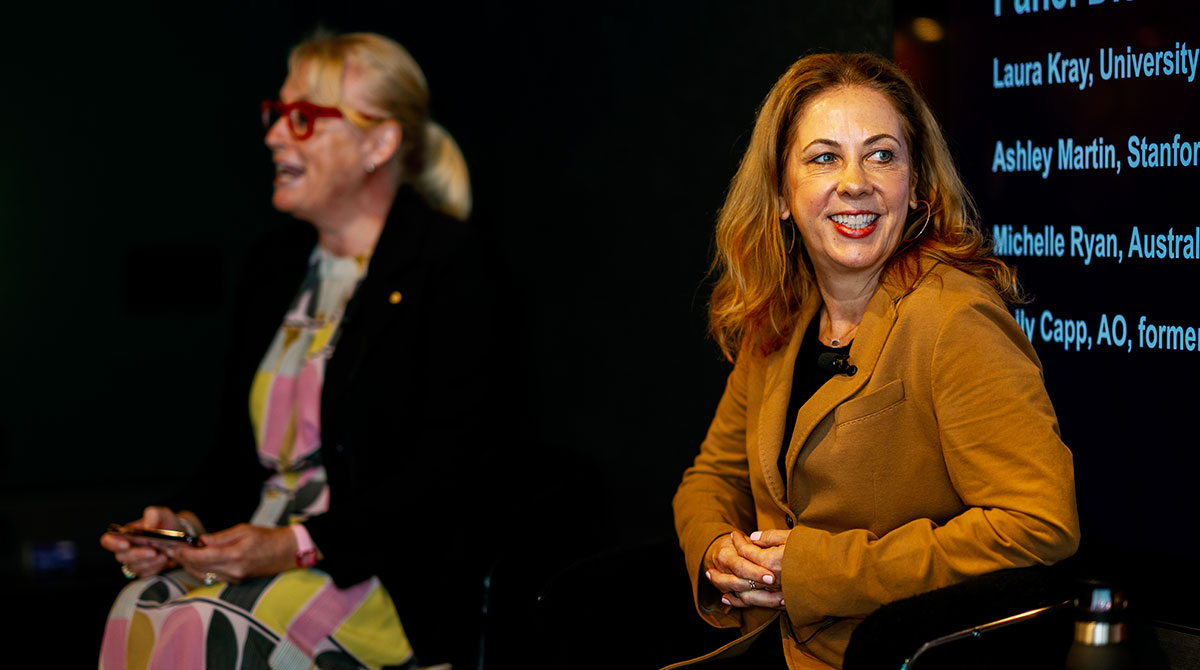
For a long time, an effective negotiation has been associated with stereotypically masculine traits.
“People think of effective negotiators as being really assertive and competitive, and having a high-regard for their own interests,” Professor Laura Kray, the Ned and Carol Spieker Leadership Chair at Berkeley Haas explained.
“Conversely, they think of ineffective negotiators as being very accommodating, weak, and not putting their own interests out there.
“And it turns out that a lot of the characteristics people associate with effective negotiators, tend to be associated with men more than women.”
These associations are in turn, being used to explain the gender-pay gap. ‘Women aren’t good at negotiating, therefore they’re not confident and simply don’t ask.’
However, Professor Kray explains that not only are women asking, but they’re often stronger negotiators then men.
Here she explains how the softer skills of collaboration and rapport building are now widely valued at the negotiation table.
Turning ‘soft skills’ into a strategic advantage
When Professor Kray and her colleagues Charlotte Townsend and Assistant Professor Solène Delecourt teach their MBA students negotiation, they asks them after every negotiation to provide feedback on their partner.
“We ask them to rate their partner on a number of characteristics, including, ‘how satisfied are you negotiating with this person? To what degree would you want to negotiate with them again?’," she said.
“We’re actually finding students are saying they’d rather negotiate with women rather than men.”
Women are reported as being more collaborative and open to helping the other party achieve their goals.
And importantly, this is not coming at the expense of the women’s economic outcome.
“It’s what we call subjective value,” Professor Kray said.
“They're more effective at building rapport, at building good working relationships at the bargaining table.
“Not only are they achieving economic outcomes on par with men, but they're also generating more subjective value, which in the long run should generate more opportunities to negotiate with people. “That sort of contradicts the stereotype, right? It's further evidence that women are actively negotiating and that they're doing a good job at it.”
These same findings were achieved when people were chatting online, and were unaware of the gender of their counterpart, so it doesn’t come down to people simply being nice and rating women more kindly.
“What we find again and again, is people are rating women partners higher and saying that they'd be more likely to want to negotiate with them again. It's generating more satisfaction.”
In addition to being more effective, women are also asking for a pay rise more frequently than men.
“People assume that men must just be negotiating for higher pay and women are not,” Professor Kray said.
However, the evidence shows that this isn’t true. In her recent study, Professor Kray interviewed alumni from top business Schools in the US.
While the sample showed women were making on average 78 cents to the dollar, it also showed that they were attempting to negotiate more than men, and not less.
So, why are women in leadership still being told no?
Despite these socio-cultural skills, and women attempting to negotiate more than men, real-world data still shows women are still being told ‘no’ more than their male counterparts.
Professor Kray explains the reasoning to this is still unclear, as most organisations are hesitant to let people observe these negotiations.
“We need to be flies on the wall to see what’s breaking down in those negotiations,” she said.
“Is she giving up more quickly? Is she pushing harder? We just don’t know. That’s the limitation.”
Negotiation tips for better outcomes
Alongside being adequately prepared, Professor Kray suggested leaning into some of these softer skills and leverage the fact that collaboration is valued at the negotiation table.
“Frame what you’re asking for as being in the interests of the other side,” she said.
Instead of ‘I deserve a higher salary’, frame it as ‘with this package, I’ll be able to deliver X results for the company.’
Ask questions to uncover shared interests and aim for a “win-win” rather than purely competitive framing.
“Women are supposed to be nurturing, caring and giving. So, when we come to the bargaining table and ask for things for ourselves, it’s a violation of these gender role prescriptions.”
Framing your ask as providing for and supporting your team, reduces backlash and increases agreement likelihood.
Professor Laura Kray was a guest speaker at the Power, Status and Influence Conference 2026, hosted by Melbourne Business School.
Learn more about our Women in Leadership programs, or look into further developing your negotiation skills with our suite of Communication and Negotiation short courses.