
Why authentic leadership matters more now than ever

Melbourne Business School’s Master of Organisational Leadership is designed to create authentic and compassionate leaders who can effectively lead in an increasingly complex environment.
At a time defined by rapid technological change, rising loneliness, workplace dissatisfaction, and growing social fragmentation, the nature of leadership is undergoing a profound shift.
Assistant Professor of Management Lyndon Garrett explained that in such turbulent times, employees are increasingly expecting human connection from their jobs and importantly, their leaders.
“In the past, leaders could afford to focus on efficiency and performance and profit.
And workers, well, they put up with it,” he said.“They were okay with showing up at work, turning off their human self, and just producing, achieving, and then going home.”
However, as the world becomes more complex, human needs, not just technical competencies, are increasingly at the heart of effective leadership.
“Life is hard, people are lonely and are expecting, and needing, to experience human connection at work,” Assistant Professor Garrett said.
“In the past few years, we've had the great resignation and quiet quitting, and many other signs that people are growing dissatisfied with their jobs.”
Organisations can no longer expect staff to remain loyal.
“If people can't find meaning and purpose at their jobs, they're going to leave or just disengage.”
This new reality underpins the Master of Organisational Leadership (MOL), a program designed to develop leaders who are not only capable, but deeply human, grounded in core human values.
At its core is a new foundational course on authentic leadership, placing compassion and human connection at the heart of effective leadership practice.
Assistant Professor Garrett who is the Program Director for the MOL explained that while new for the general public, the program has existed for nearly two decades as an exclusive offering for experienced leaders.
“For 18 years, this program has been the engine room for leadership in the superannuation sector,” he said.
“Together with the Fund Executives Association Ltd (FEAL) we co-designed a high-impact, twelve module journey that has already transformed three generations of leaders and is now charging into its fourth.
“It's been a great training ground for learning how to develop leaders effectively, and now we're finally launching it to the public.
Why authenticity matters more than competencies
While leadership frameworks, skills and best-practice methodologies remain valuable, none of it matters if people do not believe their leaders genuinely care about them.
“Leadership is complicated because we face all types of situations with different kinds of people, who have different motivations and different needs,” Assistant Professor Garrett said.
While there are frameworks - or even AI – to deal with that complexity, a technically correct response is no longer enough.
“You could plug your situation into AI as a leader and ask it, ‘What should I do in this situation?’ And it would be able to give you a set of research-based best practices,” he said.
“But we are increasingly finding that none of that matters if your people feel your motivations are self-interested or driven solely by efficiency and profit.”
Authentic leadership is about cultivating care. Helping leaders understand others more deeply and reconnect with their own humanity.
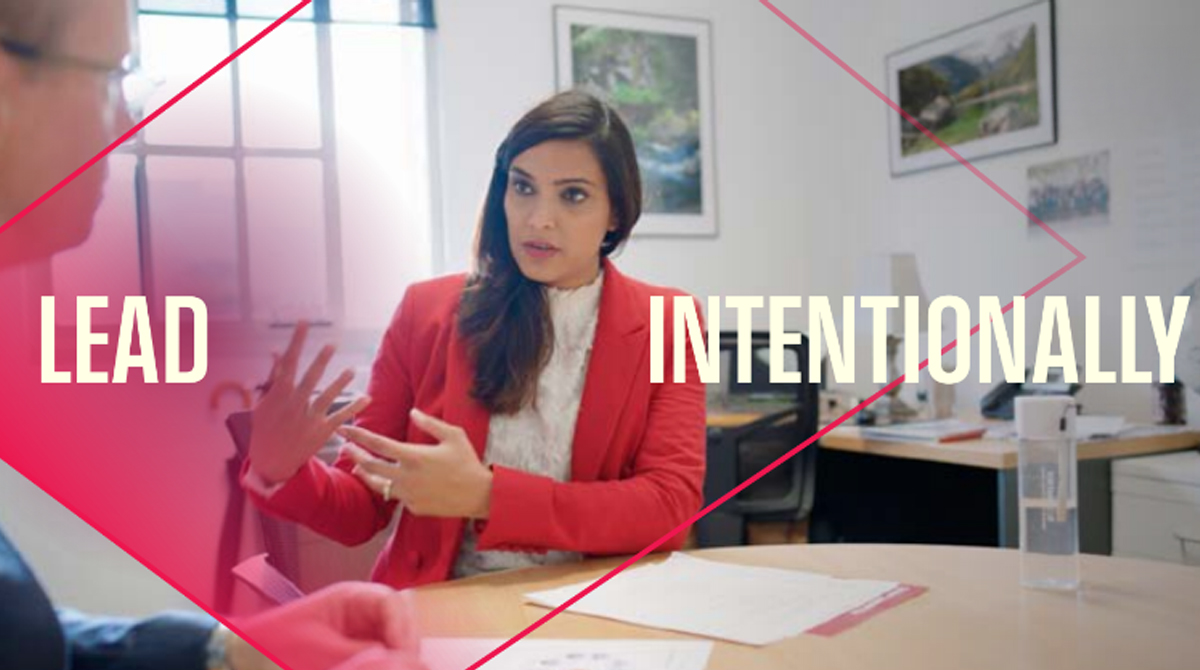
“People respond not to perfect execution, but to genuine human connection,” he said.
Reawakening humanity through story, play and experience
So how do you teach people to care?
“You can't really just tell them, hey, you need to care more about others,” Assistant Professor Garrett said.
“But deep down, human nature has this innate care for others. We all want to be compassionate. Sometimes it just gets buried under years of socialation to focus on achievement and performance.
“And so your main job as leaders, and my main job as a teacher of leaders, is to help people remember, and to reawaken this innate humanity.”
The program is therefore intentionally experiential.
Students reconnect with their humanity through:
- Storytelling: sharing personal narratives to build empathy and dissolve hierarchy
- Play: engaging in activities that temporarily strip away roles and status, enabling authentic connection
- Immersive experiences: encountering real-world situations that foster humility, perspective and shared hardship.
These methods are designed not only to shift mindsets in the classroom, but to help leaders build sustainable practices in the real world.
“We experience humanizing moments together, and then discuss how we can maintain this humanity when we go back to the real, high-pressure situations,” Assistant Professor Garrett said.
“How do we build practice to support this preservation of our humanity at work?”

Creating a community of emerging and aspiring leaders
Unlike the more quant-heavy Master of Business Administration pathway, the Master of Organisational Leadership is more human centric.
It is particularly suited to aspiring leaders or those early in their leadership journey, individuals with some experience but seeking deeper grounding in leadership practice and people management.
Assistant Professor Garrett has designed the program to create a real sense of community within each cohort.
“The ten-week course in authentic leadership forms the shared foundation for all students, with monthly leadership forums bringing the cohort back together throughout the program,” he said
Students also take electives alongside part-time MBA students, benefiting from the broader Melbourne Business School community.
The degree can be completed in as little as 18 months, with flexible pacing options.
“This blend of structure and flexibility, along with a deep emphasis on community, makes the MOL a distinctive offering for those seeking meaningful growth as leaders,” Assistant Professor Garrett said.
To find out more about studying at Melbourne Business School, visit our Degree Programs and Short Courses pages, or learn about our range of services For Organisations.