
What ballet dancers teach us about perfectionism at work

New research on ballet dancers delves into the experience of perfectionism and how organisations can promote high achievement without encouraging self-destructive behaviour.

Ballet epitomises beauty, discipline and precision.
But behind every pirouette, is a world of extreme pressure, self-doubt, and an obsession with perfection.
In a new study, Melbourne Business School’s Assistant Professor of Management, Lyndon Garrett, Ali Block of Columbia University and lead researcher Assistant Professor Rachael Goodwin from Syracuse University, explore the role of perfectionism in ballet, uncovering how organisations and leaders drive perfectionism, and how dancers balance the fine line between high achievement and self-destructive behaviour.
The research challenges the traditional psychological view that perfectionism is a fixed personality trait.
Instead, dancers shifted between destructive, maladaptive forms of perfectionism and high-performing adaptive perfectionism, depending on their environment and the social cues they received from leaders.
Importantly, they also identified the factors that drove maladaptive perfectionism.
While the study is focused on ballet, it has implications far beyond the stage.
Maladaptive perfectionism is prevalent in many high-pressure environments, from investment banking to academia and elite sport.
Assistant Professor Garrett said while performance pressure is not inherently harmful, when paired with certain leadership cues, it becomes destructive for both the individual and an organisation.
“Many dancers felt that they were able to dance better when they were not stuck in a spiral of maladaptive perfectionism,” Assistant Professor Garrett said.
So how can we create environments that lead to adaptive perfectionism that facilitate high performance and avoid maladaptive behaviours?
The pressure to be perfect
The pressure to be perfect is found in many high-pressure environments.
Consulting firms and investment banks are known for having cultures that push young professionals to breaking points, lead to burnout and long-term mental health struggles as people neglect sleep, relationships and self-care while they strive to meet impossibly high standards.
Elite sport is another arena where the pressure to be perfect is witnessed on a global stage. Assistant Professor Garrett said when Simone Biles withdrew from the Olympics due to mental health concerns it highlighted the effects of maladaptive perfectionism.
“Biles was placed on an impossible pedestal, viewed as almost too perfect to be human,” Assistant Professor Garrett said.
When the pressure to be perfect became unbearable, she made the courageous decision to prioritise her well-being and shone a light on the importance of mental health in high-performance fields.
Like gymnastics, ballet is a hyper-competitive field where dancers compete against one another for limited roles.
“In our study, dancers repeatedly spoke about the relentless pressure to be perfect, the expectations set by instructors and artistic directors, and ways in which they coped, or failed to cope, with the demands,” he said.
Good and bad kinds of perfectionism
The research focused on two types of perfectionism.
The first kind was Maladaptive Perfectionism which Assistant Professor Garrett said was characterised by excessive self-criticism, fear of failure, and an inability to accept mistakes.
“Dancers displaying these harmful tendencies described how leaders fostered a toxic atmosphere by constantly reminding them they were easily replaceable and reinforcing fear-based motivation,” he said.
Dancers experiencing maladaptive perfectionism often pushed themselves to unhealthy extremes, such as dancing through injuries, starving themselves, or isolating themselves from friends and family in pursuit of an unattainable ideal.
On the other side, Adaptive Perfectionism involves a high drive for excellence without the crippling self-destructive behaviours.
“Dancers with this mindset still strive for perfection but give themselves grace when they make mistakes and maintain a healthier relationship with their craft,” Assistant Professor Garrett said.
Four key drivers of toxic perfectionism
One of the most significant findings of the study was that external influences, especially leadership, play a crucial role in determining the type of perfectionism a dancer experienced.
“Our research showed toxic perfectionism was fuelled by certain ‘dehumanising’ cues from leaders and often the environment had a strong influence on whether dehumanisation was present,” Assistant Professor Garrett said.
The four key forms of dehumanisation are:
1. Denial of Agency
One of the most fundamental aspects of being human is our ability to make choices and decisions.
Denying employees agency—by making them feel like they have no voice or autonomy—leads to a sense of helplessness.
“When leaders create an environment where people feel they have no choice in how they do their work, employees begin to feel like just cogs in a machine,” Assistant Professor Garrett said.
2. Denial of Individuality
Another form of dehumanisation occurs when employees' unique contributions or identities are disregarded.
“Treating people as interchangeable, such as viewing them as a mere number or a job function, erodes their sense of individuality,” he said.
In ballet, dancers experience this when leaders treat them as easily replaceable parts rather than valuing them for their individual personal talents and perspectives.
3. Denial of Subjectivity
Humans experience a wide range of emotions and internal experiences—fears, hopes, worries—that shape how they navigate the world.
Denying an employee's internal experience, or showing disinterest in how they feel, is a form of dehumanisation.
In workplaces, this manifests as leaders dismissing or ignoring the subjective emotional and mental states of their employees.
4. Denial of Fallibility
Making mistakes is part of being human, yet some workplaces allow no room for error. When employees feel like any flaw or mistake is unacceptable, it creates immense pressure.
This pressure can lead to burnout and emotional exhaustion.
In environments like ballet, where directors expect a flawless performance, any imperfection is seen as a major failure, further driving dancers toward unhealthy perfectionistic behaviours.
Is maladaptive perfectionism ever necessary?
Some industries may operate under the belief that pushing individuals to their limits leads to greater success. And performance pressure often can be beneficial.
However, Assistant Professor Garrett said the research found no rational basis for maladaptive perfectionism.
“When dancers fell into maladaptive perfectionism, their performance suffered. Anxiety, exhaustion, and self-doubt led to more mistakes, not fewer mistakes,” he said.
In contrast, those who maintained an adaptive perfectionist mindset performed better and sustained their careers for longer.
“The key takeaway is high performance does not require self-destruction—pressure can exist alongside self-care, and in fact, the healthiest performers are often the most successful.”
The research found many individuals shifted from maladaptive to adaptive perfectionism once they reached a breaking point.
It was often when a dancer "hit rock bottom,” that they recognised they needed help, or when they received outside support that enabled them to shift their perspective.
The role of leadership in influencing perfectionism
In the ballet environment, Assistant Professor Garrett said dehumanising cues almost exclusively came from leaders, while rehumanising cues typically came from peers or relationships outside of work.
This underscores the importance of leadership in shaping an employee's experience.
“In ballet companies, artistic directors and instructors hold immense power over dancers' careers, and their words and actions can either reinforce maladaptive perfectionism or help dancers adopt a healthier mindset.”
Assistant Professor Garrett said many corporate environments were by default designed to strip away individuality by focusing solely on performance and role expectations.
Leaders must intentionally counter these structures by proactively affirming the humanity of employees.
He said adaptive perfectionism could be nurtured through rehumanising cues that reaffirmed an individual's humanity and help them regain their sense of self.
These include:
- Reaffirming agency: Letting employees know that they have a voice in decision-making, and their opinions matter.
- Acknowledging individuality: Valuing the unique qualities and contributions of each employee, reminding them that they are not just a number.
- Recognising feelings: Showing genuine interest in how employees are feeling, which ties into their performance and overall well-being.
- Accepting mistakes: Reinforcing mistakes are human and an opportunity for growth, not something to be feared or punished.
Reframing our pursuit of perfection
The real problem isn’t perfectionism itself, but how it’s framed and reinforced by our environment.
“Performance pressure is not inherently harmful, but when paired with dehumanisation, it becomes destructive and counterproductive,” Assistant Professor Garrett said.
The challenge for leaders and managers is to maintain high expectations while fostering a culture that prioritises the well-being of our people.
“For anyone in high-pressure environments—the key to long-term success lies in finding balance: striving for excellence without losing sight of our humanity,” he said.
By shifting the conversation around perfectionism, industries can create healthier and more sustainable pathways to high performance.
This research isn’t just about ballet; it’s about the universal struggle of balancing ambition with self-care and provides a valuable roadmap for anyone navigating the pursuit of perfection.
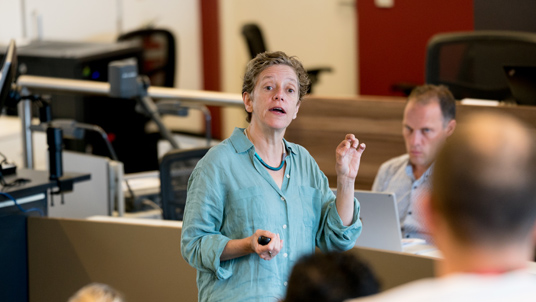
Lyndon Garrett is Assistant Professor of Management and currently teaches Managing People and Human Capital at Melbourne Business School.
To learn more about our academic insights, visit the Faculty and Research page.
To find out more about studying at Melbourne Business School, visit our Degree Programs and Short Courses pages, or learn about our range of services For Organisations.

Lyndon Garrett
Assistant Professor of Management
Faculty and Research
Through original research, we unleash ideas to shape a sustainable future.

Degree Programs
Whatever your career stage or aspirations, we have a program to suit your needs and develop your capabilities.

