
From Learning to Leadership Capability - Lessons and insights from AHRI 2026
Learning as a Strategic Lever - Melbourne Business School at the 2026 Australian HR Institute National Convention.

Melbourne Business School At AHRI
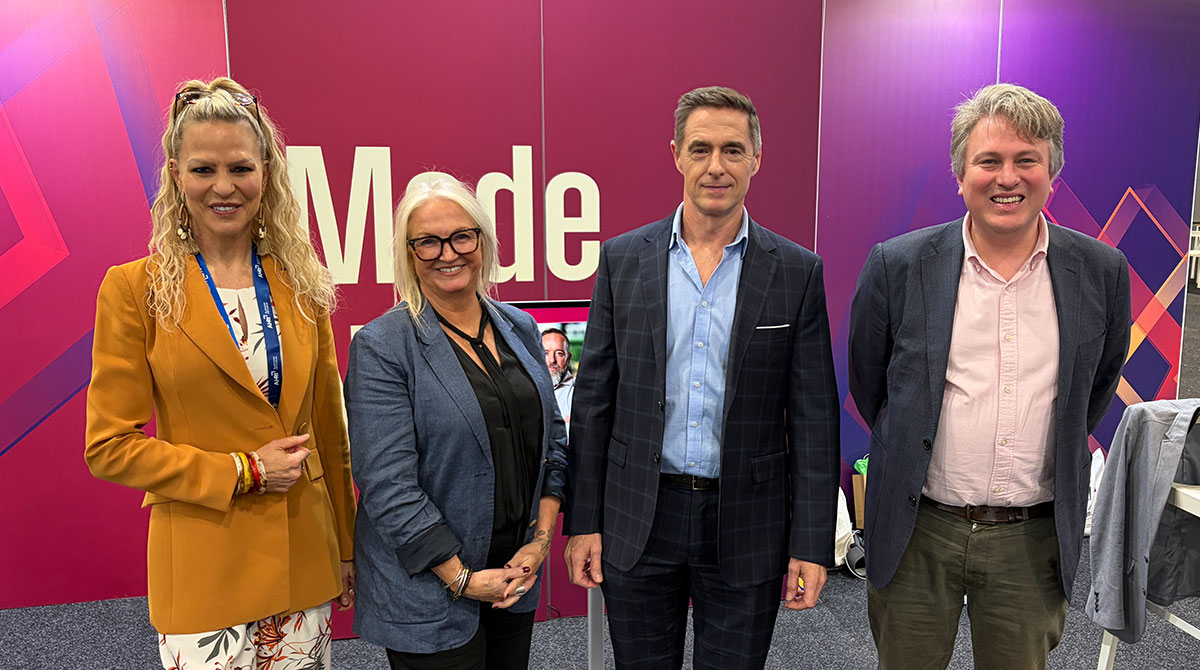
Melbourne Business School was proud to be a Premium Sponsor of the 2026 AHRI National Convention and Exhibition.
Throughout the event, we spoke with HR leaders about the opportunities and challenges shaping their organisations.
The result is our AHRI Leadership Pulse Survey Insights Report, capturing perspectives on AI adoption, leadership readiness and the capabilities leaders need most to navigate change.
Alongside the survey findings, we've also shared key insights from our AHRI partner panel, Learning as a Strategic Lever, featuring leaders from SJ Group, News Corp Australia and Aurecon, who discussed how learning and capability development can drive measurable business impact.
Download ReportFrom Learning Activity To Strategic Capability: Five Lessons For Business Impact

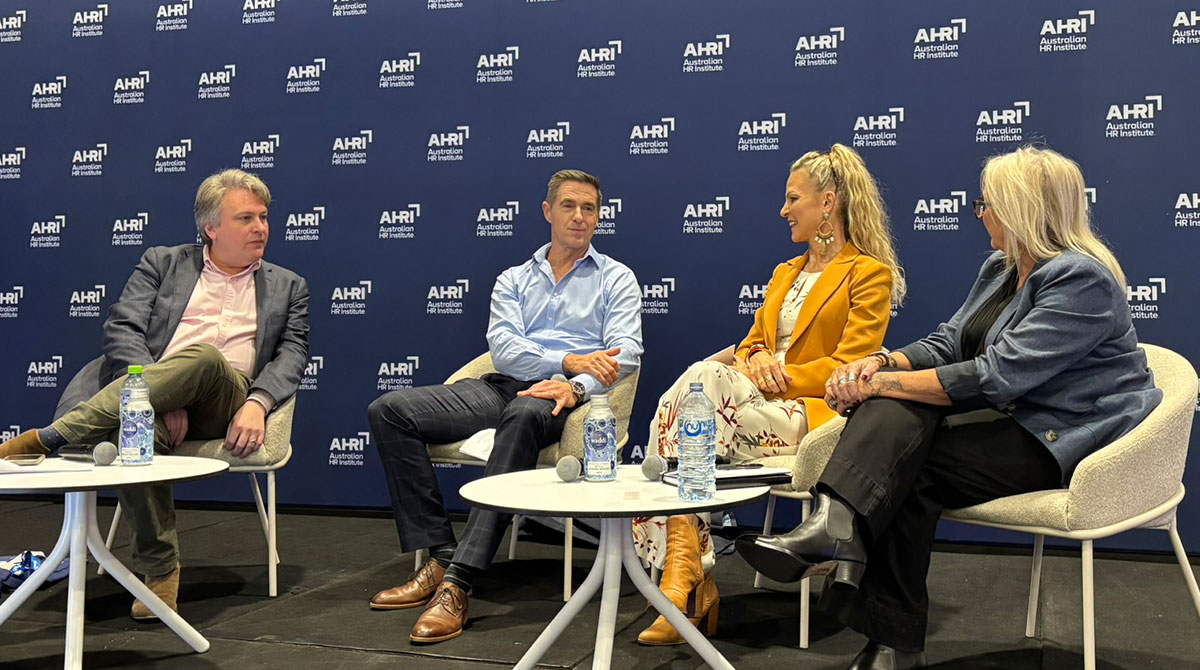
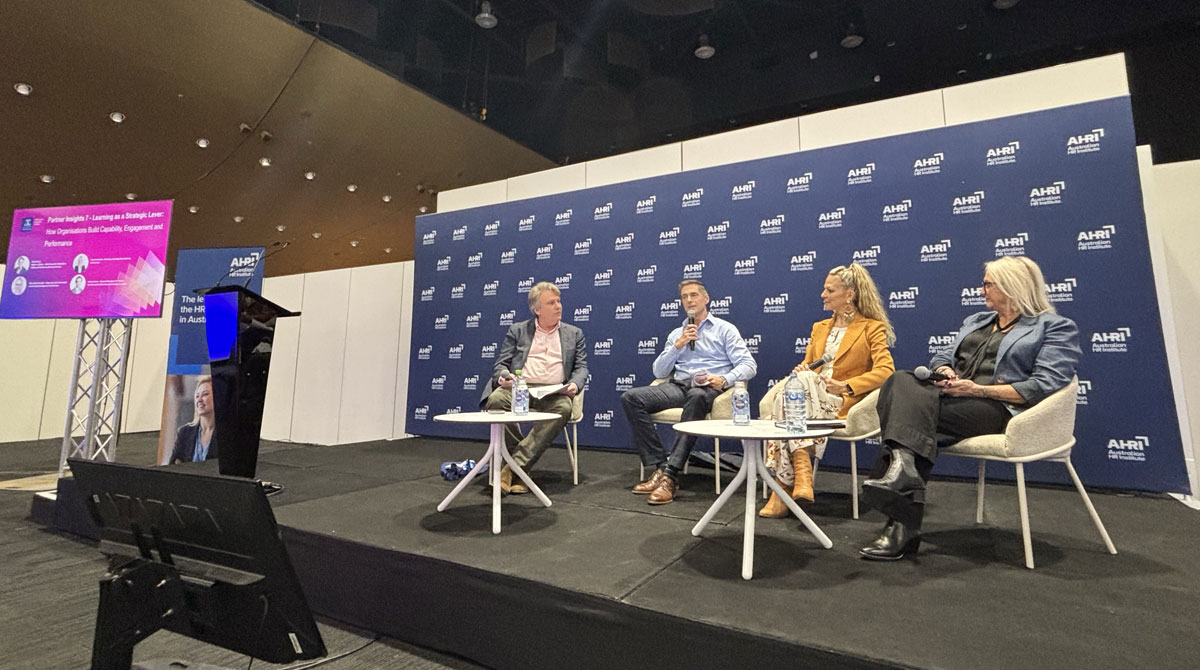
At the 2026 Australian HR Institute National Convention, Melbourne Business School (MBS) had the privilege of hosting a conversation on Learning as a Strategic Lever with Gina Adamthwaite from SJ Group, Simon Rowe from News Corp Australia and Samantha Fernando from Aurecon.
Each organisation brought a different strategic challenge to the discussion: strengthening consulting capability across a global business, preparing high-potential leaders to navigate profound industry change, and building a deeper and more diverse leadership pipeline.
Despite those differences, a common message emerged. Learning creates strategic value when it begins with a business priority, builds the capabilities required to advance it and is reinforced by the organisation around it.
The test is not simply whether people participate in or value a learning experience. It is whether they subsequently do something differently and whether that change contributes to better organisational performance.
1. Start With The Business Challenge, Not A Catalogue Of Programs
Strategic learning begins by defining the problem the organisation needs to solve. For SJ Group, technical excellence was already a considerable strength. The strategic opportunity was to complement that expertise by enabling people across different brands, disciplines and markets to operate as trusted advisers - listening deeply, thinking strategically, influencing effectively and creating value beyond the immediate project.
Rather than purchasing an off-the-shelf program, SJ Group and MBS worked together to turn the experience of the organisation’s own subject-matter experts into a practical learning ecosystem.
What began as an Australian and New Zealand pilot has since expanded globally and is designed to reach thousands of employees.
News Corp Australia’s starting point was the structural transformation of the media industry. Outstanding journalists and other high-potential employees were moving into increasingly demanding leadership roles, but professional excellence alone did not automatically prepare them to lead high-performing teams.
The required capabilities were directly connected to News Corp’s operating environment: thinking and acting more strategically, leading through ambiguity, building and developing teams, strengthening performance and accountability, and navigating ongoing change and disruption.
At Aurecon, the strategic priority came from Blueprint 2028 and its ambition to diversify and grow the organisation’s leadership talent. The challenge was not a lack of capable people. It was the need for a more deliberate ‘system’ to identify and stretch future leaders before they moved into senior roles, while continuing to deepen the capability of leaders already at the top.
As Samantha explained, Aurecon does not begin with a catalogue of programs and try to fit people into it. It starts with the actual organisational problem and asks what is genuinely needed in that business, at that point in time. That is the first shift required if learning is to become a strategic lever: move from asking, “What program should we provide?” to “What business capability needs to change?”
2. Context Is Essential To Translating Learning Into Performance
Strong learning design may draw on robust research, frameworks and external expertise, but it cannot remain abstract. People need to recognise their organisation, their work and their challenges in the experience.
Simon described contextualisation as the point at which programs succeed or fail. Newsrooms have a distinctive culture, pace and intensity. Generic leadership frameworks can therefore feel theoretical or disconnected unless they are anchored in real editorial scenarios, business challenges and strategic priorities.
When participants feel that a program understands their world, they are more willing to engage openly with the experience. That recognition creates psychological safety, supports adoption and makes it more likely that the learning will influence actual decisions and behaviour.
Context was equally important for SJ Group, although the challenge was different. A global organisation needs consistency, but it also needs relevance across markets and cultures.
SJ Group began by identifying the capabilities that should remain constant globally. These were informed by six months of consultation with internal experts and clients and included trust, reliability, empathy, strategic thinking and the ability to create value beyond technical expertise.
Flexibility was then built into how those capabilities were developed. Regions could tailor scenarios, discussions and learning experiences to their local environment, supported by local subject-matter experts and, in some instances, clients sharing their own experiences.
The result was a common language of consulting excellence without imposing a single, uniform way of working.
Contextualisation is therefore more than adding an organisational case study to an otherwise generic program. It means designing from the organisation’s strategy, culture, operating environment and actual work.
3. Design For Application, Not Attendance
One of Gina’s observations captured the central idea of the panel particularly well: “Learning is not the outcome - capability is.”
Knowledge becomes valuable when people can apply it consistently and, over time, develop genuine skill and mastery. That requires application to be designed into the experience rather than left until participants return to work.
SJ Group built its consulting experience around real client opportunities. Participants were not simply learning about consulting; they were actively consulting throughout the program.
The experience combined self-paced content, workshops with local experts, peer learning, coaching and reflection. It also rewarded people for contributing to the learning of others, helping to create an environment in which expertise was shared rather than held by a small group.
News Corp participants similarly applied their learning between modules and discussed it with their managers. At the time of the panel, participants were already identifying specific changes in how they led team conversations and made decisions. Senior leaders were also noticing behavioural shifts without needing to be prompted.
Aurecon applies the same principle to different levels of its leadership pipeline. Its work with MBS has included a week-long intensive designed around the Global Executive Leadership Team’s need to lead through complexity, as well as development for emerging leaders intended to build bench strength before participants are appointed to more senior roles.
In both cases, the objective is not knowledge transfer alone. It is for leaders to show up differently in real decisions because the experience was designed around the work they actually need to do.
4. Build A System Around The Learning
A well-designed program cannot, by itself, create lasting organisational change.
Sponsorship, manager involvement, workplace application and alignment with talent processes all matter. But these elements also need to be actively connected and sustained.
Samantha described her team at Aurecon as “system sensors and weavers”. Their role extends beyond designing a program. They continually sense where sponsorship may be fading, where leaders are not reinforcing the desired behaviours or where workplace application is not occurring - and then weave those elements back together.
This is also why the choice of learning partner matters. An effective partner needs to work within the organisation’s wider system, contributing distinctive expertise without treating its part of the solution as separate from everything else.
Gina offered a complementary perspective. Learning and development teams can create the conditions for change, but leaders create the culture in which the new capability is either reinforced or lost. Managers provide the environment for people to practise, while subject-matter experts bring the capability to life through practical experience and storytelling.
When these elements come together, learning stops being an initiative owned by the learning function and becomes part of how the organisation operates.
5. Measure Capability And Business Value - Not Just Participation
Attendance, completion and participant satisfaction remain useful measures, but they tell us relatively little about strategic impact.
More meaningful evidence includes changes in confidence and capability, application in the workplace, observable behaviour, manager feedback and improved performance against the original business priority.
SJ Group saw measurable improvement in capability and confidence, stronger client engagement behaviours and behaviour change reported by managers. Another powerful signal was increasing demand from within the business. Leaders who could see the difference in client relationships began requesting additional cohorts and, in some cases, nominating entire teams.
Learning was no longer viewed principally as time away from work. It was seen as enabling better work.
Learning was no longer viewed principally as time away from work. It was seen as enabling better work.
News Corp’s early indicators included active participation by busy, high-performing people, application between modules, specific descriptions of behavioural change and unprompted observations from senior leaders that they could see a difference.
These examples highlight an important point: the right measures follow from the business problem. If the strategic objective is to strengthen client relationships, build leadership depth or improve performance through disruption, evaluation needs to examine whether those things are changing - not simply whether the program was well received.
Reframing The Question
The panel reinforced that learning becomes a genuine strategic lever when organisations can answer five questions clearly:
- What strategic business priority are we trying to advance?
- What capability, behaviour or performance needs to change?
- How will the experience reflect the organisation’s context and real work?
- What needs to surround the learning so that the change is reinforced?
- What evidence will demonstrate that capability and business performance are improving?
This requires a longer-term view of capability development.
It also requires learning to be connected to organisational strategy rather than added to it later as a portfolio of development activities.
The central question is no longer simply, “What learning should we provide?” It is, “What must our people and organisation become better able to do and how do we create the conditions for that capability to endure?”
When organisations begin there, learning can become much more than a development activity. It can become a strategic asset and a source of competitive advantage.

