Made. Not born: Why investing ‘wealth in people’ pays dividends

Associate Professor Samuelson Appau says he wouldn’t be where he is today without Melbourne Business School taking a gamble on a 23-year-old from Ghana.
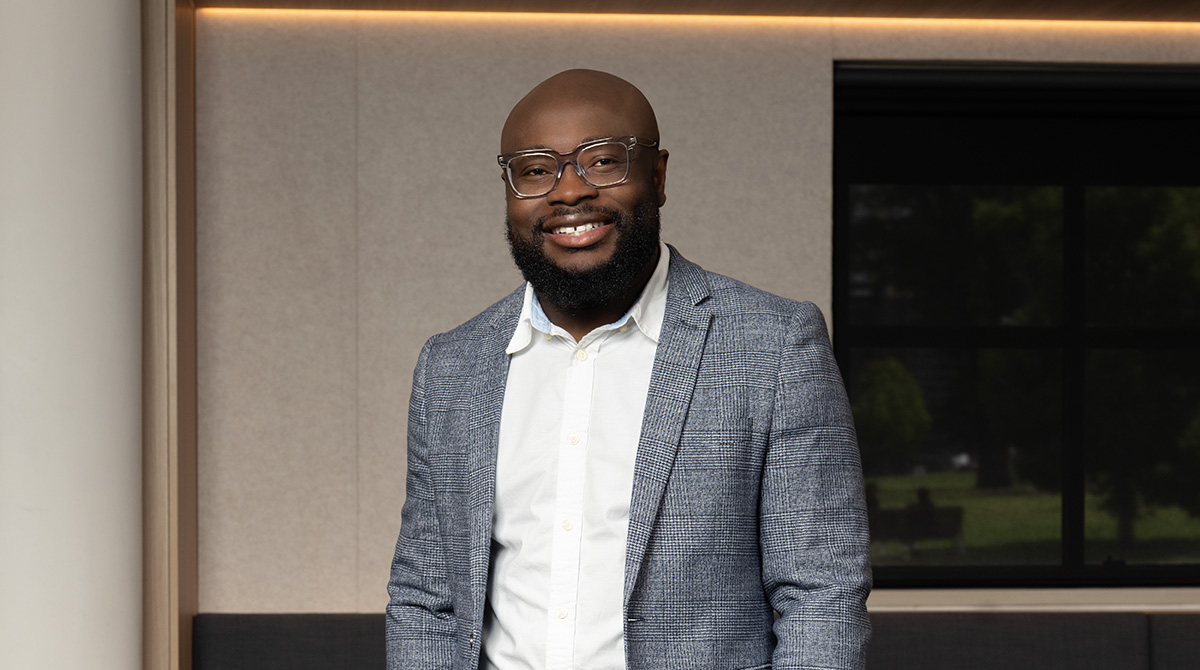
If you’ve ever had the good fortune of being in Associate Professor Samuelson Appau’s marketing class, you’ll know it’s not just any MBA class.
It’s a performance.
From the Black Sherif afrobeats playing as students pile into the lecture theatre to the stories weaved into each lesson and the vocal dynamics reminiscent of a church pastor.
This is someone who loves teaching.
Samuelson has wanted to teach since he was a child, writing an essay in Primary School about why he wanted to become a teacher when he grew up.
“I was the kid that when the teacher wasn’t there I would get up in front of the class and teach the other students,” Samuelson said.
His love of learning was encouraged by his father who taught him to read before he even started school in Ghana.
“He would get me to read billboards from the bus, and I would watch quiz shows and the news instead of cartoons,” he said.
Now thanks to a scholarship opportunity to complete his PhD at Melbourne Business School, he’s living his dream as Associate Professor Marketing at Australia’s leading business School and the Program Director of the Blue Nile Program.
But he says he wouldn’t be here if it wasn’t for a few people who invested in him.
“When I look at the opportunities I’ve had to grow my career, none of it is an overnight success, none of it’s self-made, all of it is communally made,” he said.
“It’s changed my life, it’s changed the life of my family and other people that I support. Sometimes you just need a hand.”
A stepping stone
Having previously studied Business in Ghana, Marketing was love at first sight for Samuelson.
“We are all consumers, we all buy things from the market and experience marketing all the time, so it was immediately relatable,” he said.
“I loved that marketing was responsible for keeping the business afloat, for communicating and engaging with customers and that it had the creative side of it.”
Samuelson worked for global marketing research and brand consulting company Kantar in West Africa where he advised some of the world’s biggest brands such as Coca-Cola, Nestle and Unilever.
But working in market research and brand consulting was always a stepping stone for him to get to academia.
“My Junior High School teacher said you’re a bright kid, why would you want to be a teacher on a poor salary? So, he said if you’re clear you want to be a teacher then you want to be a university teacher because that pays better.”
A leap of faith
Samuelson arrived at Melbourne Business School to do his PhD on a full scholarship after he said the school took a chance on him.
“The University of Melbourne had never admitted anybody from Ghana to their PhD program before, back then it was a big gamble,” Samuelson said.
His mum was a baker who didn’t finish primary school, and his father finished high school before becoming a teacher and a church pastor.
“If I didn't get a scholarship at MBS, I could not have come here. I couldn't afford it, my parents couldn't afford it.”
He packed his bag as a then 23-year-old and travelled 15,000 kilometres away from his family, ready for an adventure.
“Growing up in a church environment did give me a lot of faith that it’s all going to work out.”
Shaping the scholar
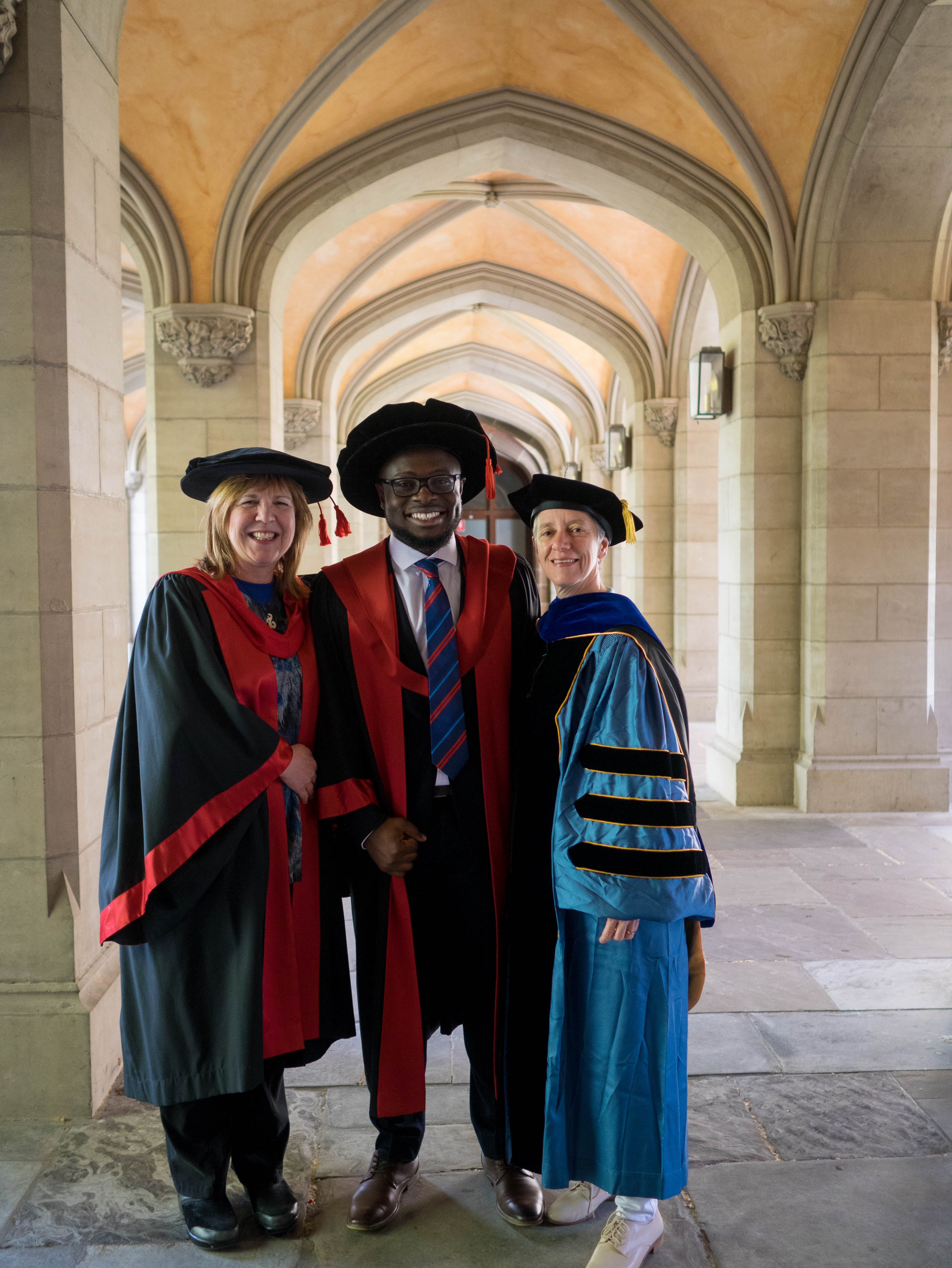
His primary supervisor was Professor Jill Klein who he credits for supporting him to become the scholar he wanted to become rather than forcing him down a defined path.
“Doing my PhD at Melbourne Business School was career-defining, life-changing. The quality of supervision is through the roof,” Samuelson said.
“I wanted to study consumer culture, and she recognised how much that was a good fit for me and even allowed me to bring in an additional supervisor who had expertise in that area, Professor Julie Ozanne, from the Faculty of Business and Economics, so I could do the research I wanted to do,” Samuelson said.
When Samuelson finished his PhD at Melbourne Business School nine years ago, he had no expectations of coming back until in 2022 he was offered a dream position on Faculty.
Wealth in people
Samuelson has taught thousands of people over the years and he’s now also paying it forward for the next generation of African leaders as Program Director of the Blue Nile Program.
The program helps Africans who are professionals, entrepreneurs and working in government to develop their leadership and business training to impact their communities and their own careers.
“There is a certain concept in Africa, called ‘wealth in people’. The notion is that people are the most important source and generators of wealth,” Samuelson said.
That’s because when you invest in people, whether its training and giving them the tools and resources or words of affirmations and support, they then go on to impact others.
“One of the most important things I think a leader should recognise is that when you invest in people, you’re putting wealth in them and that creates dividends.”
When Associate Professor Samuelson Appau walks through the corridors of Melbourne Business School today, he often passes a glass display case holding the PhD theses of former students.
Among them sits his own, a quiet reminder of how far he’s come since he travelled 15,000 kilometres away from his family, with a full scholarship and a little bit of faith.
Samuelson is an Associate Professor of Marketing at the Melbourne Business School and teaches Consumer Behaviour and Marketing on the Part-Time and Full-Time MBA programs. He is also the Program Director of the Blue Nile Program.

Samuelson Appau
Associate Professor of Marketing
Blue Nile Program
Leadership Development
Blue Nile Program
Empowering African Australian entrepreneurs, working professionals, and leaders of not-for-profit organisations with the tools to grow their businesses.

Degree Programs
Whatever your career stage or aspirations, we have a program to suit your needs and develop your capabilities.

