Why the biggest AI opportunity lies in increasing revenue

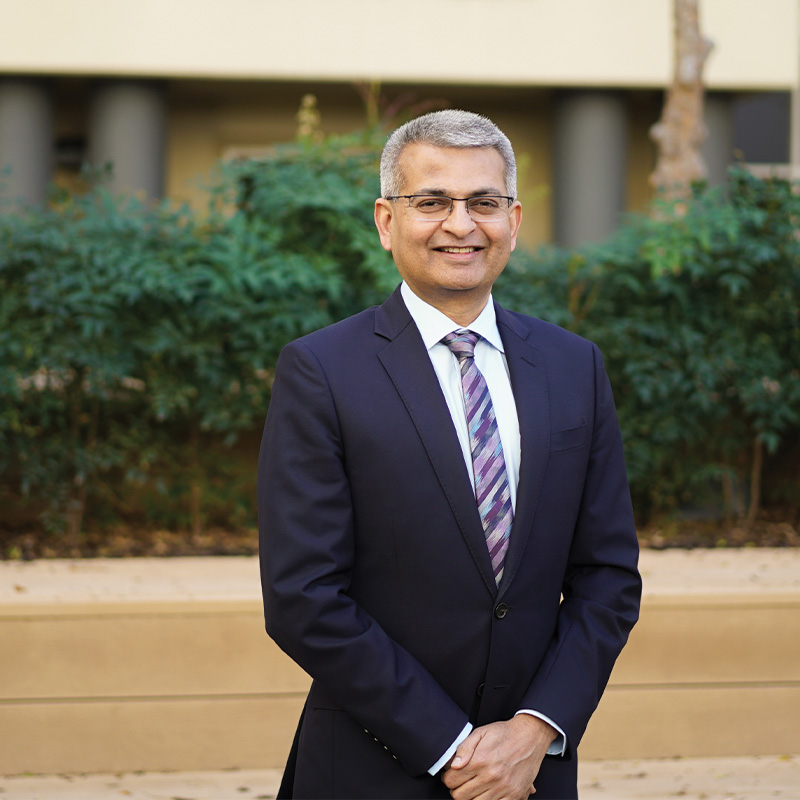
AI may cut costs, but the real advantage is reimagining new revenue streams, says Professor Ujwal Kayande.
Artificial Intelligence (AI) alone isn’t a business strategy, but it must be part of it.
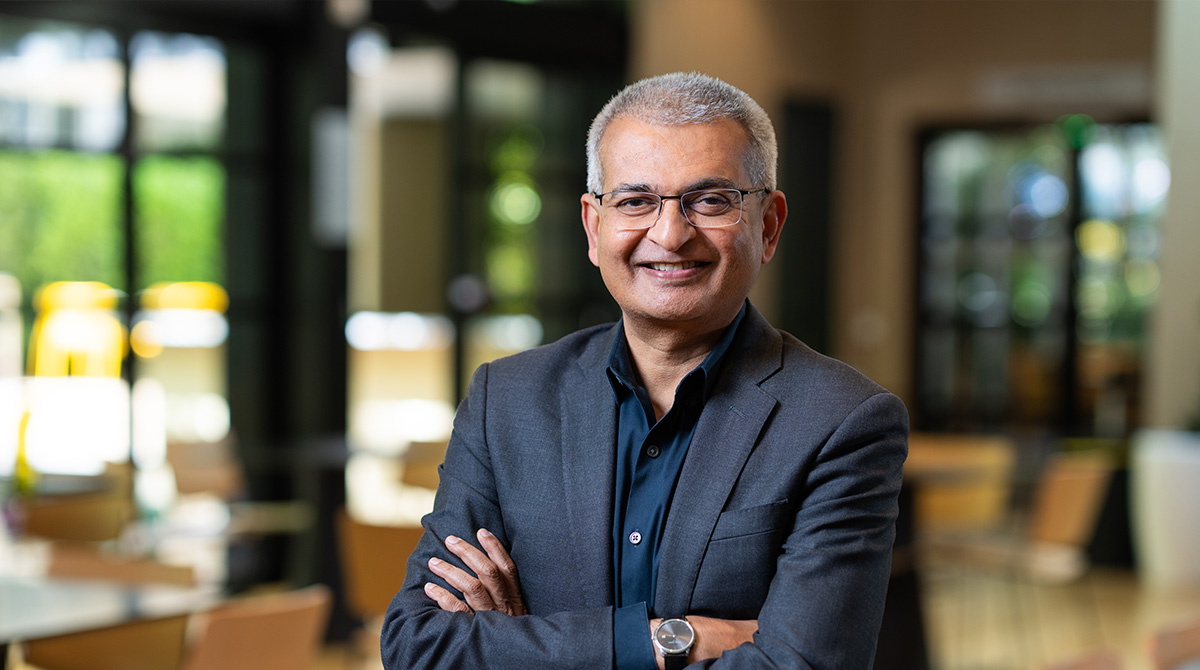
That is the resounding advice of Professor Ujwal Kayande, Director of the School’s new Institute for Digital Innovation and AI (IDIA), who stresses businesses that implement AI effectively could not just reduce their costs but also increase revenue.
“There are enormous opportunities both on the revenue side and the cost side if you incorporate AI into how you do business,” he said.
To leverage AI effectively, he said leaders needed to first understand what AI could do.
“That’s where things come a bit unstuck because there’s so much uncertainty around this space and so much is changing,” Professor Kayande said.
“The natural reaction for human beings is to not do anything and wait for things to clear up to know how to move forward.”
But he warned that businesses that waited too long could be at a competitive disadvantage.
“If there’s one thing I would suggest businesses do, it’s to start experimenting now.”
So how can you incorporate AI into your business strategy?
AI for sustainable competitive advantage
The lowest hanging fruit with AI is on the cost side, where Professor Kayande said there has already been a lot of emphasis on AI-based automation to streamline operations.
But the biggest untapped opportunities were on the revenue side.
“You can only take out so much cost, eventually you’re going to have to grow the upside. It’s the reimagining of your business that helps on the revenue side. And that is harder for competitors to imitate,” he said.
The ability to rapidly prototype and test new products was just one example of an advantage AI could present on the revenue side.
What is automatable is typically the simple, standardised work employees do, freeing up more time to shift towards what will drive revenue and new business.
Invest in AI for the front end of business
Businesses have a temptation to assign responsibility for anything technology-related to the IT department.
Professor Kayande said standout businesses reimagine how customer experiences could benefit from technologies such as AI.
One business leading the way is Commonwealth Bank, which has been at the forefront of digitisation and AI for improving the customer’s experience.
“The CEO has declared it’s going to be a digital-only bank and everything is aligned to that North Star of digitising their business and how they work with customers and clients.”
He points to the CommBank app that has a great digital experience for customers, which is underpinned by technology and AI.
“When you offer those standout experiences to customers, you can potentially generate better margins, market share, and greater share of wallet, all things that will help you grow revenue. And it is not easy for competitors to imitate the experience.”
Use different forms of AI in tandem
Businesses that are realising the biggest benefits are using multiple forms of AI in tandem to solve for customer problems.
For example, basic statistical tools can help understand customer segments by answering questions such as ‘how many segments are there?’, ‘what are their needs?’, and ‘which segments are more attractive?’
These tools can then help design the best offers for each segment.
Advanced AI such as machine learning could then be used to make real-time offers to these customers based on their interactions with a company’s electronic digital platforms.
And then generative AI can determine how to position the offer to that customer segment to maximise conversion.
And while one might argue customers don’t like interacting with AI bots, Professor Kayande thinks that AI could improve customer service. For example, long wait times on the phone to reach a bank or telco provider representative.
“Have you seen the crowds at airports when a flight gets cancelled? Wouldn’t it be better if there was an AI bot or AI agent to solve this problem as quickly as possible?”
“Will AI get things wrong a few times? Sure, it will. But humans already get it wrong many more times.”
The risks of artificial intelligence
When it comes to the risks of AI, Professor Kayande said the biggest risks were around not understanding what the tool can and can’t do.
“AI is known to hallucinate and provide some random responses,” Professor Kayande said.
“There needs to be a process where it augments a human rather than totally replaces it.”
The second key risk is that algorithms can reinforce human biases and therefore exacerbate the bias.
“If you know what those biases are, then you can try and develop the AI to mitigate them as best as possible,” he said.
Routine, low-risk jobs will be automated
While it’s commonly understood that, “it’s not jobs but tasks that will change,’ Professor Kayande doesn’t entirely agree.
“I think that’s just a way to sugarcoat what is going to happen. If most of what you do is routine, low-risk, of course your job is likely to be automated.”
He said roles that were relatively routine including in accounting, customer service, software programming, and low-level legal roles could be disrupted.
“Senior lawyers will continue to be very valued because they apply judgment and there is high risk in the outcomes of what they do.”
But while there would be job losses, he said there would also be job gains.
A 2025 Oxford study looked at over 12 million job ads across the US, UK, and Australia to examine job substitution and complementarity effects of AI.
It found that demand was declining for easily automatable skills such as translation, data entry, and summarisation, while demand was rising for skills like digital literacy, analytical thinking, teamwork, resilience, and agility.
The study found complementary demand outweighed substitution by up to 1.7x, suggesting AI adoption was creating more demand for human-in-the-loop (HITL) skills.
The biggest opportunities for jobs
Where does Professor Kayande see the biggest opportunities?
“I’m often asked this question from parents who ask what should their five-year-old do to set themselves up for the future,” Professor Kayande said.
His advice is to invest in learning which helps you form better judgements because as more tasks get automated this will become more valuable.
Professor Kayande said while software jobs were getting disrupted by AI, coding was still an important skill because it forces precision, reasoning, and problem-solving.
“Mathematics builds the formal structures of reasoning, while philosophy cultivates the capacity to question assumptions, weigh evidence, grapple with ambiguity, and reflect on right and wrong. Together, they cultivate good judgement that machines alone can’t replicate.”
And if there’s one skill, he recommends people hone, it’s critical thinking.
“Machines will do the work. Humans will provide the judgement. Critical thinking – sharpened by mathematics and philosophy – is the foundation that shapes how humans and machines work together.”
Ujwal Kayande is Director of the Institute for Digital Innovation and AI (IDIA) and a Professor of Marketing. Ujwal teaches Digital Product Management, Marketing Strategy, Analytics, and Generative AI for Business in MBA and Executive Education programs.
Melbourne Business School short courses provide evidence-based best practices and insights in artificial intelligence, machine learning, and digital transformation, equipping you to navigate an evolving technological landscape. Learn about our Business Analytics & AI Short Courses. Or to find out more about Australia’s Number #1 MBA program visit our Degree Programs page.