
The three factors that define an inspirational leader

Leadership expert Professor Adam Galinsky shares the three universal factors that define an influential leader, and how to cultivate these qualities.
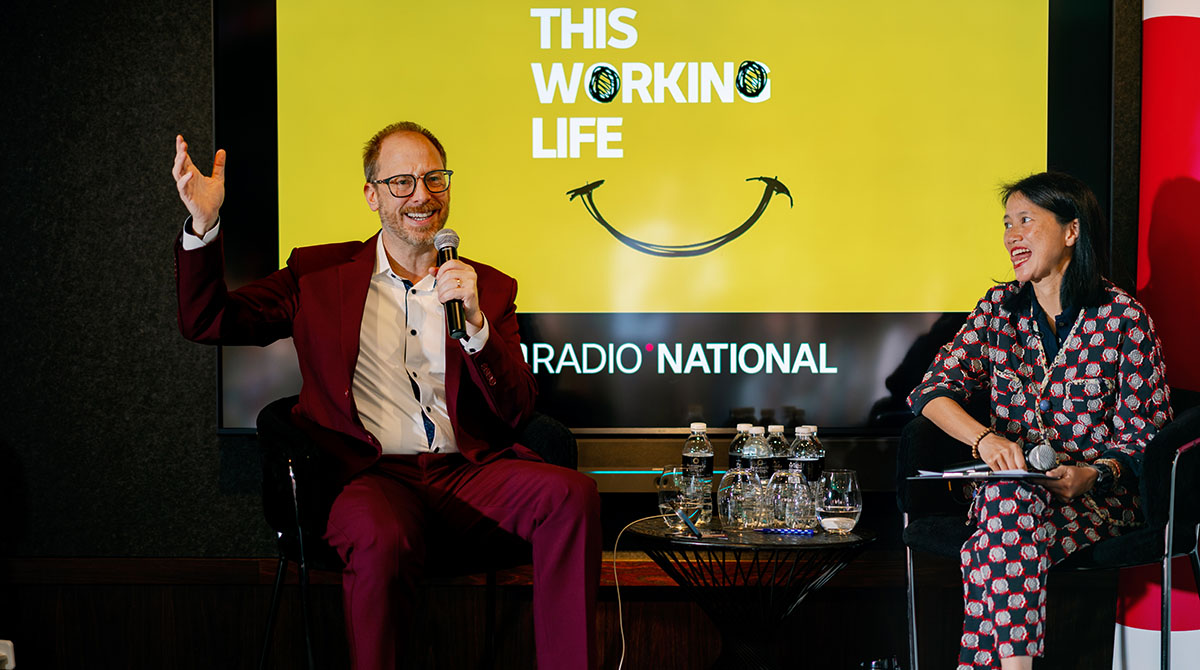
When you are a leader – , what you do, what you say – has unavoidable impact explains Professor Adam Galinsky, the Paul Calello Professor of Leadership and Ethics at Columbia Business School and Distinguished Management Scholar at INSEAD.
It’s what he calls the Leader Amplification Effect and it is why we care so much about leaders and their behaviour.
“As a leader, a lot of people are paying attention to us. Everything a leader does gets amplified,” he said.
“But what that really means is that their impact also gets intensified. An offhand constructive comment can come across as a humiliating criticism. Or a causal compliment can become glorious praise.
“You don’t really have a choice whether you have impact or not, but you do have a choice of whether that impact is positive or negative, uplifting or soul crushing.”
So how can you ensure you’re leadership is elevating and motivating your staff, rather than causing humiliation and resentment?
Here Professor Galinsky shares the three universal factors that define an influential leader, and how to develop them as part of your personal brand.
A universal consensus of what inspires
Throughout his research, Professor Galinsky has interviewed tens of thousands of people across the globe to try and ascertain what makes an inspirational leader.
“One of the things I’ve done, is just ask this very simple question: tell me about a leader that inspired you, and give me just one word to describe what is was about this person that filled you with a sense of awe and admiration,” he said.
“And then I ask them about another type leader who also changes them inside, but this leader creates a seething cauldron of rage and resentment. What was it about this leader that made your blood boil?”
What he began to notice was that these two types of leaders were essentially mirror images of each other.
“An inspiring leader is optimistic and sees the bigger picture. An infuriating leader is pessimistic and stuck in the weeds.
“An inspiring leader is courageous while an infuriating leader is cowardly.
“An inspiring leader is generous and understands others while an infuriating leader is selfish and just focuses on the self.”
It also quickly became apparent that the themes beginning to emerge, were universal.
“There's not a single inspiring attribute, characteristic, behavior, trait, that's mentioned in one country that's not mentioned in every other country,” he said.
“So it's really this universal continuum.”
The three universal factors of inspiring leadership
Across cultures, leadership boils down to three core dimensions he explained.
- Visionary – sees a bigger and optimistic picture
- Exemplar – is calm and courageous and authentically passionate
- Mentor – is generous and understands others
“As leaders, we can inspire or infuriate people through our words, through our behavior, and through our interactions,” Professor Galinsky said.
“The reason why these are the three universal factors is because each of them satisfies a fundamental human need.”
Being visionary satisfies the fundamental human need to find meaning in and understanding of the world around them; being an exemplar satisfies our need for feeling like we are protected and propelled forward; and being a mentor fulfills the fundamental need for belonging and status.
“So effective leadership is about serving human psychological needs,” Professor Galinsky said.
“That’s what inspiring leaders do, they meet the needs of their people.”
How to increase your influence
For leaders who are wanting to ensure they are inspiring but might be lacking on some of these core competencies, there is good news.
“I've identified a universal set of attributes, but they are essentially skills, right? People can practice them, they can develop them, they can nurture them.
“We can all become more inspiring over time.”
Professor Galinsky has a framework for people looking to become more inspiring.
“Building off the bible saying, I call it REIP what we sow,” he said.
“It is the idea that whatever we put out in the world, we can get back in kind.
“My REIP is an acronym. R stands for reflection, E stands for emulation. So, we think about who inspired us and try to emulate them. And then I is turning those reflections and emulations into intentions and then turning those intentions into practice.
Pivotal to these practices is the reflection.
“One of the things I’ve shown in my research is that we can become more visionary, become a better exemplar, and become a better mentor through a couple of different, very specific types of reflection tasks," he said.
To become more visionary for example, Professor Galinsky says we need to reflect on our values.
“One of my favourite research projects was working with a Swiss employment agency, where everyone in Switzerland must go to register unemployment benefits,” he said.
“We randomly selected half of the newly unemployed citizens to reflect on their most important values, explain why they're important, and how they have demonstrated them in their life.
“Two months later, we had to end the experiment because the values reflection task was so helpful, it doubled the rate of employment, and the employment agency asked us to give everyone the intervention.”
Specific Reflection tasks Professor Galinsky suggests:
- Become more visionary by reflecting on our values
- Be more calm and courageous - reflect on when you felt your powerful and your best self
- Becoming a better mentor – reflect on other people’s perspective
Consistency is key to building your personal brand
Beneath each factor, Professor Galinsky’s research goes into detailed sub-elements. Its these more detailed elements which separates someone like Trump, who on the surface, appears to meet the core capabilities.
“When I talk about exemplar, my research shows there's really three sub-elements of that,” he said.
“So one is being calm and courageous, the other is being authentically passionate. And the third, which is a really, really, really important one, is about consistency.
“Are you consistent with your vision, right? Are you consistent with your words and deeds? And that gets back to the question of honesty, right? And are you consistent in how you treat people?
“And I think Donald Trump, you would say he's authentically passionate. He presents himself as courageous, but he's not consistent. He doesn't treat people consistently.”
Professor Adam Galinsky was the keynote speaker at the Power, Status and Influence Conference 2026 hosted by Melbourne Business School.
To learn more about developing your leadership capabilities, explore our range of leadership courses in our Award Programs and Short Courses.
Master of Organisational Leadership
Leadership
Master of Organisational Leadership
A leadership-focused Masters for professionals stepping into leadership responsibility - focused on building confidence, judgement and authentic leadership capability.
The art of captivating an audience from a TEDx founder
We are all selling something. Whether you’re pitching a startup or negotiating a payrise, these universal tips will help you communicate more effectively.

