
COP30: What business needs to know

Professor Don Henry AM provides the key takeaways from on the ground at COP30 in Brazil including why Australia is poised to be a global clean energy superpower.
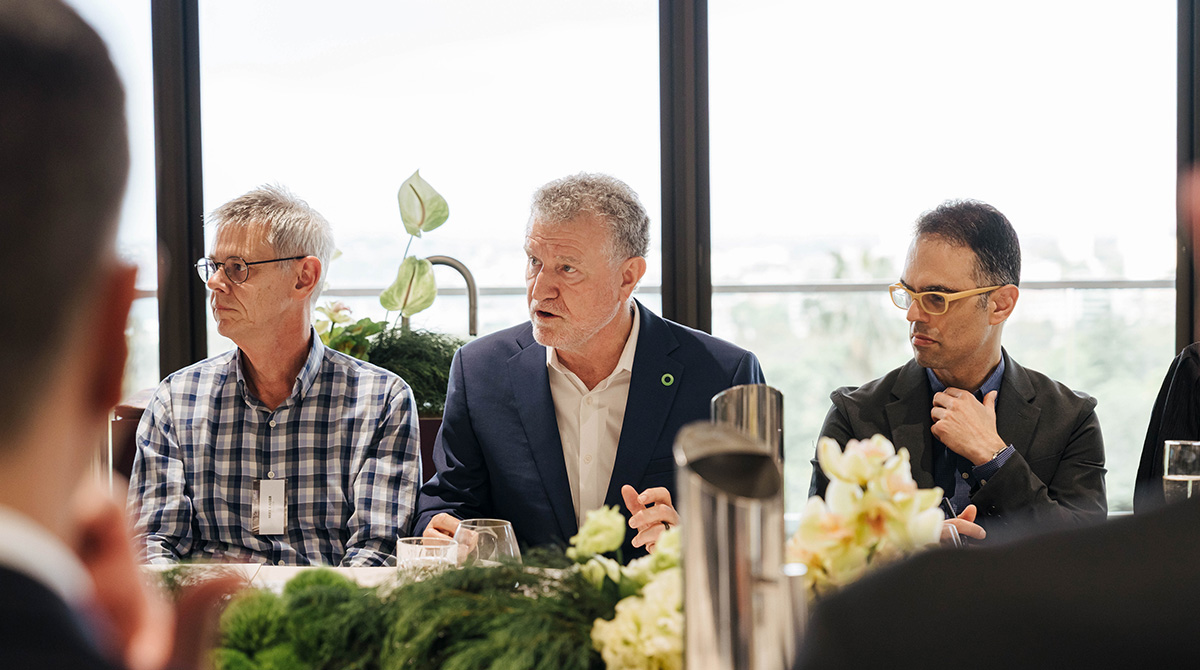
Professor Don Henry AM chairing a business roundtable on climate finance in October.
Last week, 194 countries gathered at the mouth of the Amazon river at Belem, Brazil for COP30, the annual climate change negotiations where countries come together to track and agree further action.
Ten years on from the Paris Agreement, COP30 sent a clear message.
All 194 countries present agreed that the global transition to low-emission economies is accelerating and is the 'trend of the future’. The debate is not whether it will happen but how fast and deep it happens.
It also marked the first time that a major country, the US, was absent.
But many businesses, and even those in the State of California, are moving ahead with the transition, making money and reducing their risks in economies that are rapidly decarbonising their energy sectors.
There were even some surprising moves from China and South Korea.
This is not to say that COP wasn't without it challenges. Russia and Saudi Arabia were blocking some proposals more vigorously that they usually do, perhaps unsurprisingly given today's stormy geopolitical waters.
So, what does this mean for Australian business and what opportunities does this present?
Australia has the highest average solar radiation of any continent on earth. This gives us some of the best solar energy resources in the world and potential for low emission economies as well as goods and services compared to most of our trading partners. Our Research & Development and education capabilities, and growing business expertise in managing low emission transitions, position us well.
There are also business opportunities to export clean products, technologies, and services, to markets increasingly investing in lower emissions like China, South Korea, South and Southeast Asia, the EU, and even California.
Here are some key takeaways from this year’s COP30.
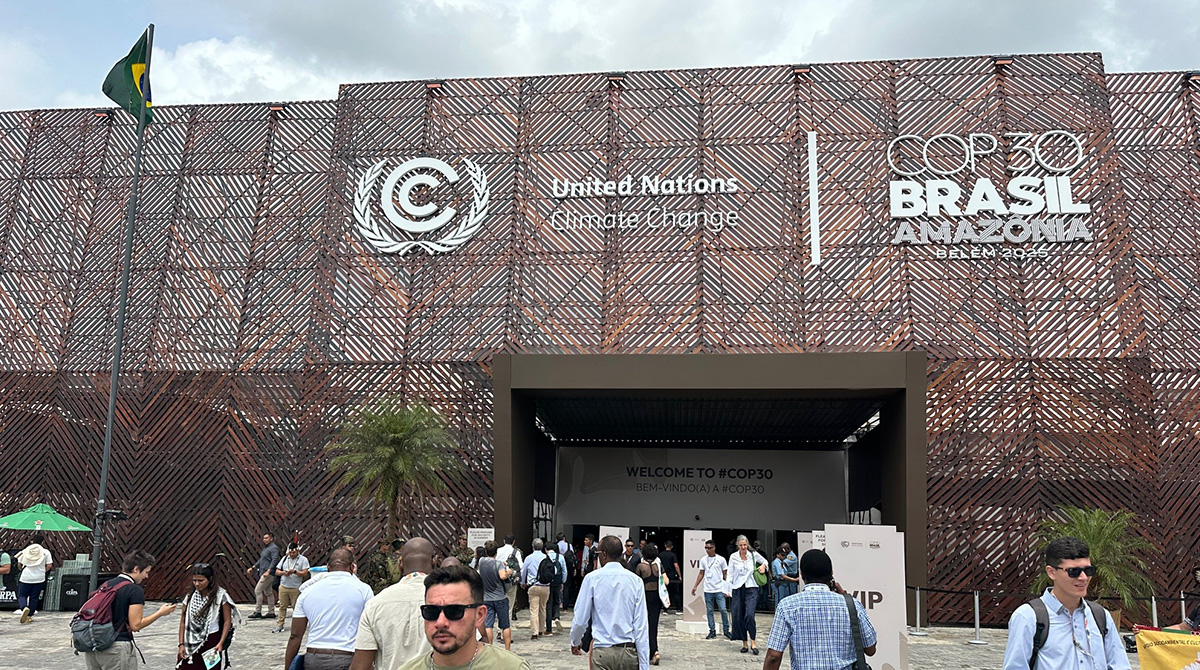

1. A global consensus that we must act urgently now
At every summit there is a formal consensus agreement that requires all countries to sign, and any country can block (it’s not a majority vote).
Getting 194 countries to agree on anything is always tough.
For example, efforts led by Brazil to advance a ‘roadmap for the transition away from fossil fuels’ were blocked from consensus by a group of countries led by Russia and Saudi Arabia, despite a previous COP agreement under the Presidency of the UAE that recognised this transition was needed.
So, what did achieve a global consensus?
- A sense of urgency: The consensus recognised ‘the need for urgent action and support for achieving deep, rapid, and sustained reductions of greenhouse gas emissions in line with 1.5 degree pathways’ and aligning national action with the Paris Agreement goals. It ‘encourages Parties to align their commitments towards global net zero by or around mid-century’. While we are going forward, we’re not going forward fast enough.
- There was a strong focus on climate finance: The agreement ‘calls on all Parties (Governments) to enhance their enabling environments with a view to increasing climate financing’. Developing countries secured commitments to strengthen finance for adaptation. There was also agreement to support just transitions to better consider the social dimensions of decarbonisation.
- Don’t wait to act: Many countries submitted new stronger commitments to reduce emissions as required in a 5-year cycle by the Paris Agreement. Progress is being made on getting closer to achieving the emission reduction goals, but more effort is needed. Countries are now encouraged to ‘strengthen their contributions at any time with a view to enhancing its level of ambition’. There is a sense of urgency to accelerate pace.
2. Australia to work on a roadmap to transition away from fossil fuels
Since COP26 in Glasgow, countries have been forming coalitions to move faster on specific issues without needing full consensus from all parties.
This year more than 80 willing countries, led by Brazil and including Australia, the UK, most European, Latin American, and Pacific countries, supported a voluntary agreement to advance a roadmap for the transition away from fossil fuels and will commence work on this, after it failed to achieve full consensus.
There were also stronger coalitions of countries for forest and nature conservation to reduce emissions and draw CO2 out of the atmosphere.
These voluntary coalitions matter because they can signal where policy and capital will flow next even if not every country is on board.
3. We’re on the way to becoming a clean energy superpower
The third part of COP is what each country commits for its own action.
Australia arrived with a new emissions reduction target of 62-70% below 2005 levels by 2035. It is modest relative to what the climate science says is needed but it’s in line with many other countries’ efforts and was welcomed.
Over the years, under different Governments, Australia has played a constructive role in the Paris Agreement and its implementation, and this is recognised.
Australia will be ‘President of Negotiations’, a central role, for the next COP in 2026 which will be hosted in Türkiye. The senior meeting prior to the COP will be held in the Pacific so Australia will be very much on the global stage with opportunities for the Australian and Pacific governments, businesses, and societies to demonstrate leadership.
We are also well-positioned for a clean energy future. More than one in three homes and small businesses now have a solar system on their roof – which is world leading, and large scale solar, wind, and energy efficiency, and electric vehicles are moving rapidly ahead. Batteries and pumped hydro are also firming up storage with rapid technology improvements. Australia is down the track to becoming a smart clean energy superpower.
4. China made a historic signal on emissions reductions
A key takeaway from the COP is that China committed to reduce its economy wide emissions for the first time, pledging to cut them from their peak level by 7 -10% by 2035.
While this is modest compared to the science says is needed, it’s historic as we will see an increasing drive to build clean economies in China.
This will have direct trade implications for Australia.
China will accelerate deployment of renewable energy and clean technologies and carbon-intensive industrial sectors like steel will come under requirements to decarbonise.
As one of China’s major suppliers of iron ore (a key product in steel) and metallurgical coal, it's in Australia's interests to support the steel industry to decarbonise.
5. The surprise move from South Korea
Another surprise move that will have a flow on effect for business in Australia came from South Korea.
South Korea is a heavy user of thermal coal, which is burned in power stations to produce electricity, including coal imported from Queensland.
At the COP they joined a coalition of willing countries accelerating the transition from coal to clean energy. South Korea has pledged to close 40 of its 61 coal fired power units by 2040, and not to build any new unabated coal plants (this sounds a long way off but it’s not far away).
Given the country’s heavy dependence on coal this signals a rapid shift in demand away from fossil fuels from one of our trading partners. It’s a reminder to business that countries can make decisions that change their trajectory rapidly.
6. California and other US States were in attendance
Even though the US was absent, several US governors turned up, including the California Governor, Gavin Newsom.
The Governor highlighted that California is the 4th biggest economy in the world, and he said California was committed to a rapid transition to clean power, renewable energy and electric vehicles and overall emissions reduction.
He said “we’re not stopping, we’re speeding up.”
So, while climate action by the US might be slower because of the federal government’s position, we are still seeing quite a rapid transition in the US that's being led by many state governments.
COP30 sent a clear message that the transition to cleaner economies is speeding up and not slowing down with all 194 countries committed to the Paris Agreement (excluding the US).
The transitions present both business risks and opportunities with capital flowing towards clean energy led by renewables and low-emission industries.
Australia has more opportunities to capitalise on the best solar radiation on earth and low-cost renewable energy compared to many of our trading partners. Our solar resources, growing clean-tech capabilities, and excellent research and education at our universities, give us a strategic edge that many businesses are and can capitalise on.
The transition is no longer a distant scenario; it’s an accelerating reality to compete in now.
Don Henry AM is the Melbourne Enterprise Professor of Environmentalism at the University of Melbourne. He is the former CEO of the Australian Conservation Foundation. Don is an International Board Member of The Climate Reality Project, chaired by the Hon. Al Gore, former Vice President of the United States. He is working with the new Sustainable Value Creation Institute at Melbourne Business School launching in 2026 to help organisations manage sustainability transitions.

Sustainable Value Creation Institute
The Sustainable Value Creation Institute (SVCI) was established with business, for business, with the purpose to fundamentally advance sustainable value creation across corporate Australia.

Emerging Social Purpose Leaders
Leadership Development
Emerging Social Purpose Leaders
Develop your business and leadership skills as an emerging leader in not-for-profit and other social purpose organisations. Generous scholarships available.

For Organisations
Discover learning solutions for your organisation to unleash the power of your people.

