Professor Mara Olekalns receives Lifetime Achievement Award

Professor Olekalns found her calling in conflict resolution while managing a large-scale change initiative in the public service.
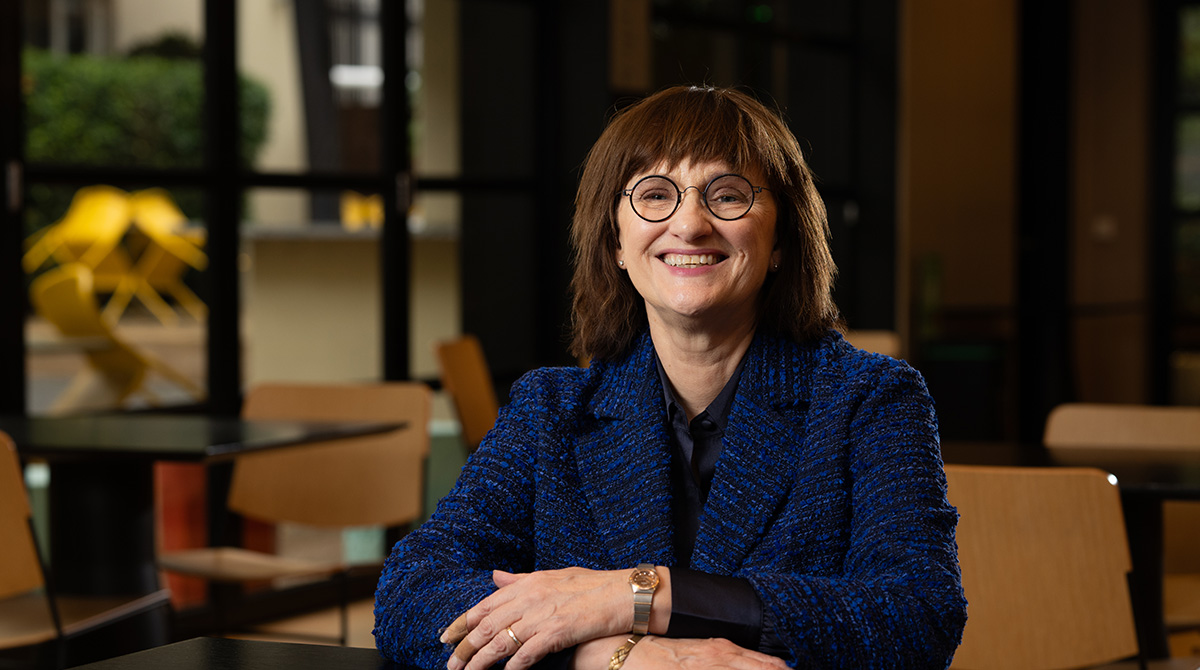
Professor Mara Olekalns has been awarded the International Association for Conflict Management (IACM) Lifetime Achievement Award for her contributions to the field of negotiation and conflict resolution.
A Professor of Management, specialising in negotiations, Professor Olekalns has worked at Melbourne Business School since 1999 in numerous roles including Deputy Dean, Associate Dean (Research) and Associate Dean (Faculty).
She was presented with the prestigious award at the association’s 38th annual conference in Vermont on July 15.
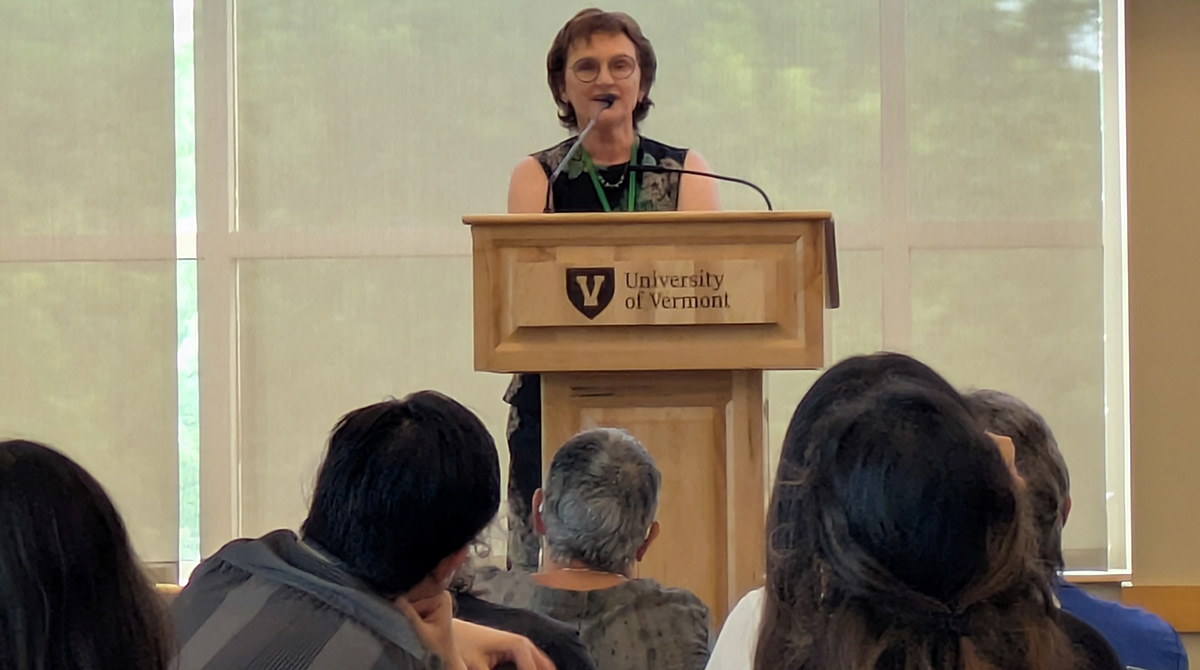
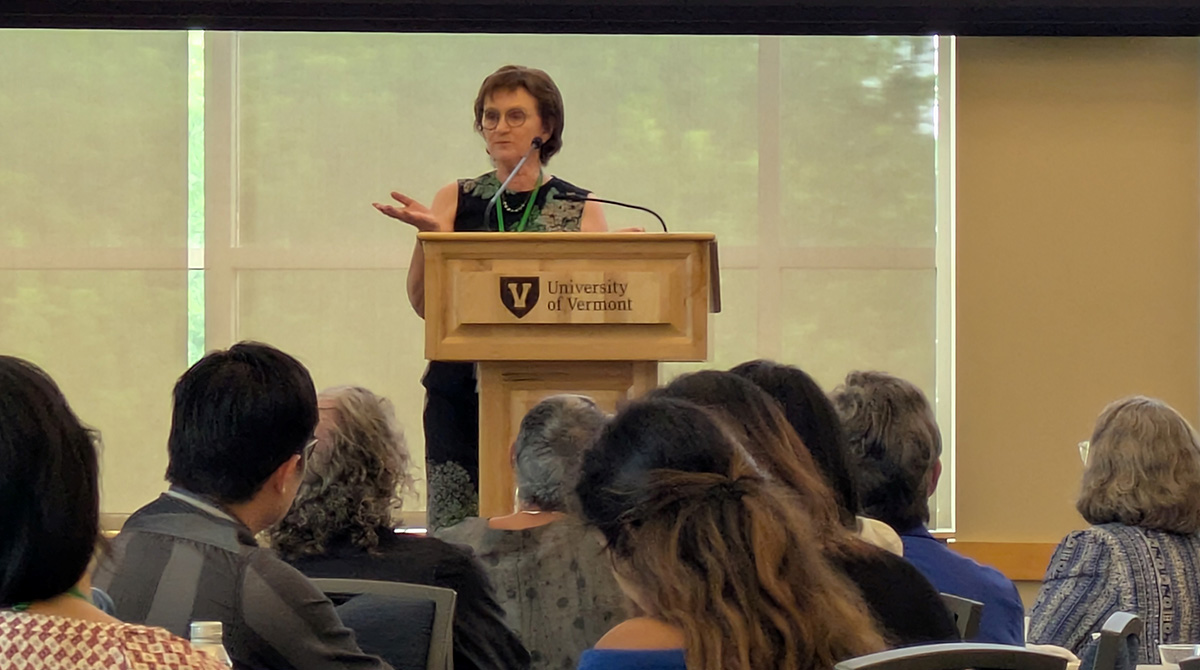
“It feels like a warm glow of pride really,” Professor Olekalns said of the milestone.
The Award recognises the incredible breadth, depth, and impact of Professor Olekalns’ contributions to the field as well as her leadership and service to the broader community.
Melbourne Business School Dean Jenny George congratulated Professor Olekalns on the achievement.
“We are fortunate to have had Mara share her award-winning research with our students over three decades. Her teaching is world-class and has shaped the way our students navigate conflict both personally and professionally.”
At the heart of Professor Olekalns’ research is her value of serenity and the core belief: “We don’t need to fight with each other, there’s a better way.”
Finding her calling
Professor Olekalns academic journey has not been linear. After completing her PhD at the University of Adelaide, she spent several years working in public service before she was tasked with managing a large-scale change initiative.
During this period, she attended conflict resolution training and discovered an interest and inclination how conflicts are resolved, eventually becoming a specialist trainer in the area.
When her (now) husband, who’s also an academic, accepted a role at the University of Otago, Professor Olekalns took up a role at the University’s Department of Psychology where she came across research into how to effectively negotiate.
“When we returned to Australia, I made a promise to myself that if I stayed in academia, it would only be if I could work on things that were fun and engaging,” Professor Olekalns said.
“It turns out negotiation and conflict resolution have been just that for more than 30 years.”
There must be a better way
Over three decades, Professor Olekalns research has largely focused on communication dynamics in negotiations and how the way people respond at key moments of conflict shape outcomes.
“I was really interested in how what we say and how we respond shapes the outcome we get at the end of the negotiation,” she said.
This led her to explore what she calls “critical junctures” or key moments that can transform the direction of a negotiation.
Her research has intersected with unexpected disciplines like marriage therapy, resilience, and narrative psychology.
She was awarded the 2023 International Association for Conflict Management Outstanding Publication Award for her article, ‘Gradual Drifts, Abrupt Shocks: From Relationship Fractures to Relational Resilience’ which helped readers better understand how work relationships can recover from conflict.
And she explored what romantic relationships can teach us about business negotiations in her article Nine lessons from love: Couples therapy for negotiators.
Passing on her knowledge
Outside of her research, one of the most rewarding aspects for Professor Olekalns has been seeing the transformation of her students after making small adjustments in their approach to negotiation and conflict.
“Suddenly a whole different style opens up and they find a more constructive and rewarding way of moving through friction and tension with others,” Professor Olekalns said.
She wants her students to leave the classroom with these key takeaways:
1. Social capital is just as (if not more) important than economic capital: “By this, I mean the quality of the relationship you exit the negotiation with, do you leave with the other person being willing to negotiate with you again and a high level of trust?” There is a lot of evidence that social capital is a better predictor of what happens in future negotiations than economic outcomes.
2. Choose your language carefully: “A simple thing most people can do is talk about ‘we’ rather than ‘me’ which brings us together like we’re standing side by side as opposed to being on opposite sides of the table.” The more you talk in terms of ‘we’ rather than “I” the more likely you are to end up with a win-win outcome.
3. Put yourself in their shoes: Spend some time before a negotiation thinking about where the other person is coming from and map out the potential challenges. “Then you’re less likely to be put off guard because when you’re off guard you tend to be in a more defensive position.”
4. Frame negotiations as problem-solving exercises: This mindset changes the dynamic by because it treats negotiation as a problem to be solved together. “Figure out what the sticking points are, try to understand them and think of different ways to solve the problem.”
A legacy of connection
When asked what she’s most proud of over the past three decades, Professor Olekalns said it’s not the work, but the strong relationships she’s formed over the years.
“There’s a deep personal satisfaction of knowing there’s this group of people I’m tightly connected to, and we push each other to think and explore ideas. That synergy keeps us moving with intellectual curiosity.”
As Professor Olekalns looks ahead to retirement at the end of next year, she’s not done thinking deeply about the world.
She plans to volunteer for animal welfare charities and perhaps even turn her current research into a book.
And there will be more time ahead for baking, cooking, and doting on her two cats, Bandit and Hobo, the latest generation in a long line of furry companions.

Professor Mara Olekalns' beloved cats Bandit and Hobo
Recommended reading:
For academics
Olekalns M., Caza, B.B., & Vogus, T. (2020). Gradual Drifts, Abrupt Shocks: From Relationship Fractures to Relational Resilience, Academy of Management Annals, 14, 1-27.
2023 International Association for Conflict Management Outstanding Publication Award (2020).
For professionals
Olekalns, M. (2022). Nine lessons from love: Couples therapy for negotiators, Negotiation Journal, 38, 573-594.
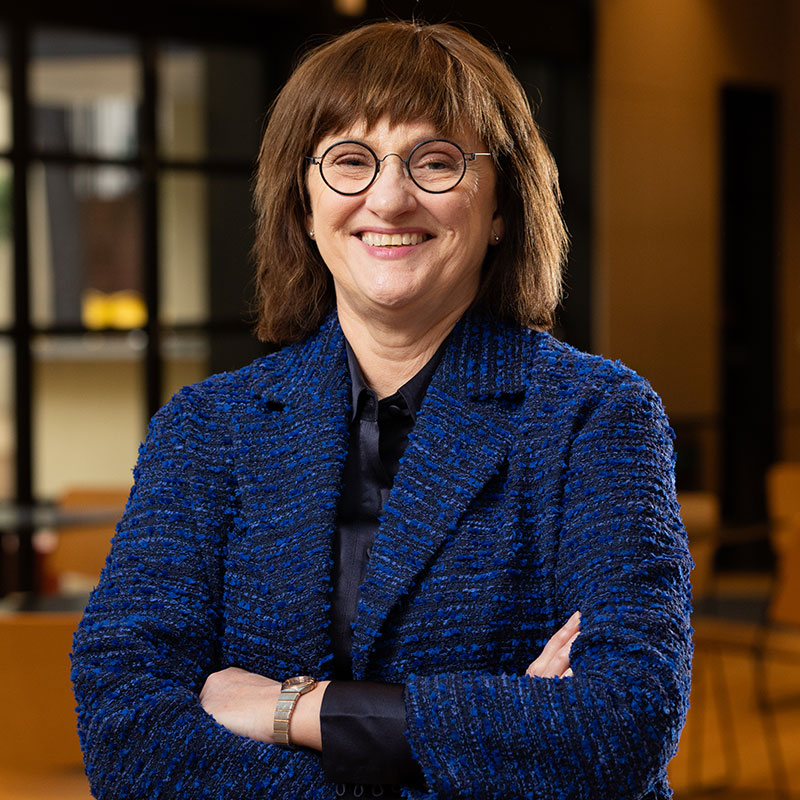
Mara Olekalns
Professor of Management (Negotiations)

Negotiation and Conflict Resolution
Communication & Negotiation
Negotiation and Conflict Resolution
An immersive and hands-on short course that will empower you with strategies to achieve better outcomes in workplace conflict and negotiations.

Degree Programs
Whatever your career stage or aspirations, we have a program to suit your needs and develop your capabilities.

