Made. Not born: How Christine Holgate rose through the ranks

Christine Holgate’s accession from teenage runaway to poster child for corporate Australia is rooted in resilience, opportunity and education.
It’s hard to imagine Christine Holgate as an 18-year-old punk rocker with a nose piercing and a shaved head.
But rewind a few decades and Christine had just been kicked out of home by her father.
She got on a train from the small village of Cheshire to London with 200 pounds in her pocket and no prospects.
The first night she arrived she slept on the floor of Euston Station.
Soon after, Christine got a job at a burger bar as a waitress earning 50 pence an hour and worked from 9am until 1am, six-days a week.
On her one day off each Sunday, she went to church to get some human interaction.
It was here that she met Florence, a 78-year-old woman, who sent her to university and changed her life.
“Somebody asked me the other day, ‘what do you think is the biggest difference is between the person you are and the person you could have been? And it's education.”
This is the story of how Christine Holgate, the ultimate underdog, rose to the highest ranks of business.
And like her beloved Collingwood Football Club (where she spent nine years on the Board including as Director) it’s why you should never write off Christine Holgate.
A Guardian Angel
Christine was living in a bedsit when Florence took her under her wing after meeting her at the church.
“This lady had been a cleaner at the BBC and lived in community housing. She was not wealthy, but she changed my life,” Christine said.
Florence saw something in Christine and persuaded the Dean of the local business school to sponsor her to do a business degree at the University of North London.
She later went on to obtain several post-graduate qualifications, including an MBA.
“She basically nobbled him and told him he had to give me free tuition because I could not be a waitress,” Christine said.
“If he had not done that, I would not be in this room today.”
From personal transformation to business transformation
Over her career Christine has turned around multiple companies.
“I'm very lucky that I've been able to work with great teams. And I'm just one member of that team. But it's definitely been our employees who've led the turnaround,” she said.
When she arrived at Australia Post, the company was forecast to lose $426 million in the next three years.
She led a team of 75,000 people bringing in $8 billion revenue and led a Bank@Post deal, securing $220 million for Australia Post while saving banking in rural and regional Australia.
After rewarding her employees with Cartier Watches (instead of cash bonuses) Christine faced a public firestorm, grilled by a Senate committee and was pressured to resign by then Prime Minister Scott Morrison.
She was later cleared of any wrongdoing by an independent investigation.
Christine’s open about the toll that period took on her mental health as well as those close to her. She was splashed on the front pages of every newspaper; a particular low point was a caricature depicting her as a prostitute leaving the Prime Minister’s office.
“I've never seen that happen to a man. So why is it okay to do for a woman? We still have got a lot of work to do in our culture and our society if people think that's acceptable,” she said.
Inspiring the next generation of female leaders
Christine doesn’t want the public backlash she experienced during that time to deter others from aspiring to run companies.
"The common thing I kept hearing was, ‘I don't want to be a CEO. I don't want to go through what you've gone through’,” Christine said.
“That means everything women have gone through up to this point has been a wasted opportunity if you don’t pick up the mantle from us and run the next relay.”
Today Christine is the Team Global Express Group Executive Chair another company that has undergone a transformation under her leadership.
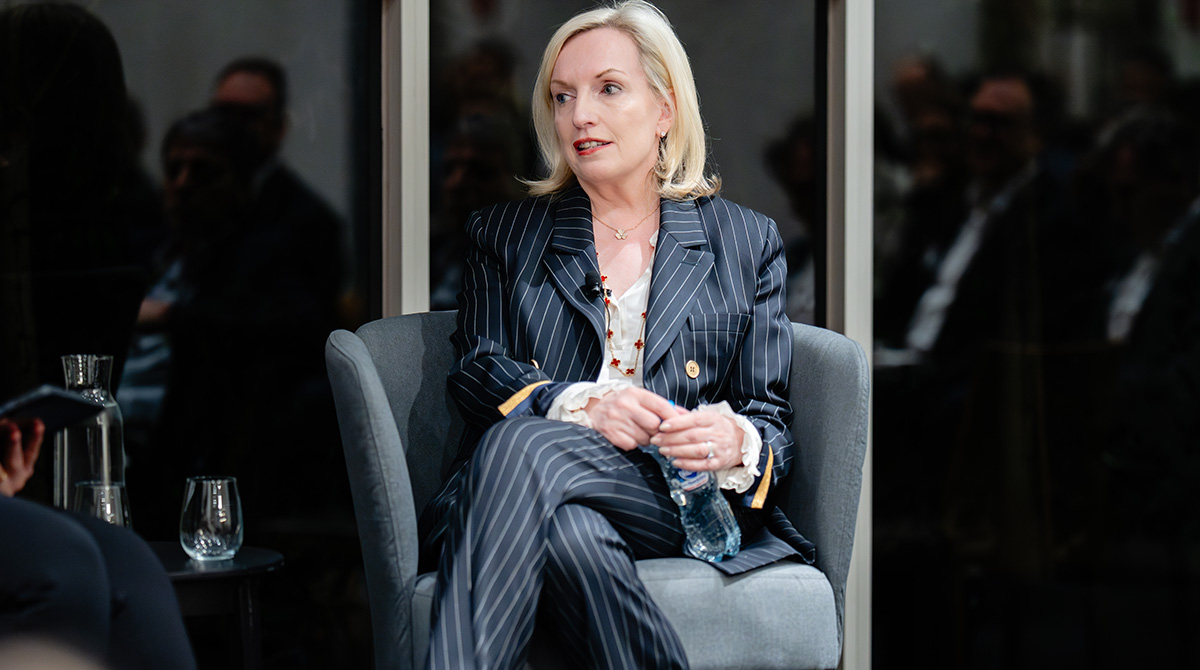
“We were losing hundreds of millions of dollars. Turnover was 37% and it was Covid so we couldn’t get around the country,” she said.
She wrote to each of the 146 sites and asked them to choose five people to represent the site and asked three key questions which she believes every leader should ask when turning around the company:
“What do we need to do to grow, what do we need to stop and what must we protect?”
She said the last question was particularly important.
“So often when you’re changing a business you’re thinking about the growing and the stopping, but you forget the protecting bit. But these things are core to culture and they’re precious,” she said.
“I'm a big believer that actually if you want to grow something or turn it around, actually ask the stakeholders, your employees, customers, suppliers and then make an assessment.”
Paying it forward
The first woman to be named “CEO of the Year” by CEO Magazine isn’t sure where she would have ended up if it wasn’t for that chance meeting with Florence.
She said this defining period influenced her determination and continues to inform the way she thinks about people including her employees.
It’s also why she’s resolved to do something about homelessness.
“Having faced it myself earlier on, homelessness is very close to my heart,” Christine said.
“We have something like 480,000 community housing, 3.5 million people living in poverty and over a million people living in extreme poverty. What I would love is in 20 years’ time, our women, children and men are living in safe homes and have a roof over their head.”
Find out about our degree programs and the Women in Leadership Program designed to support high-potential women returning to the workforce or considering a career change.

Women in Leadership Program
Leadership Development
Women in Leadership Program
Confidently enter the next phase of your professional journey with invaluable guidance, skills, and connections to thrive in leadership.
Women in Senior Leadership Program
Senior Management
Women in Senior Leadership Program
Transform the way you lead and amplify your impact among a highly supportive peer group who resonate with your journey.

Degree Programs
Whatever your career stage or aspirations, we have a program to suit your needs and develop your capabilities.

