A leading professor's strategies on how to optimise your learning

The best thing we can do to optimise learning is to get some sleep and exercise, according to Professor Jill Klein. Here’s how to optimise your learning.
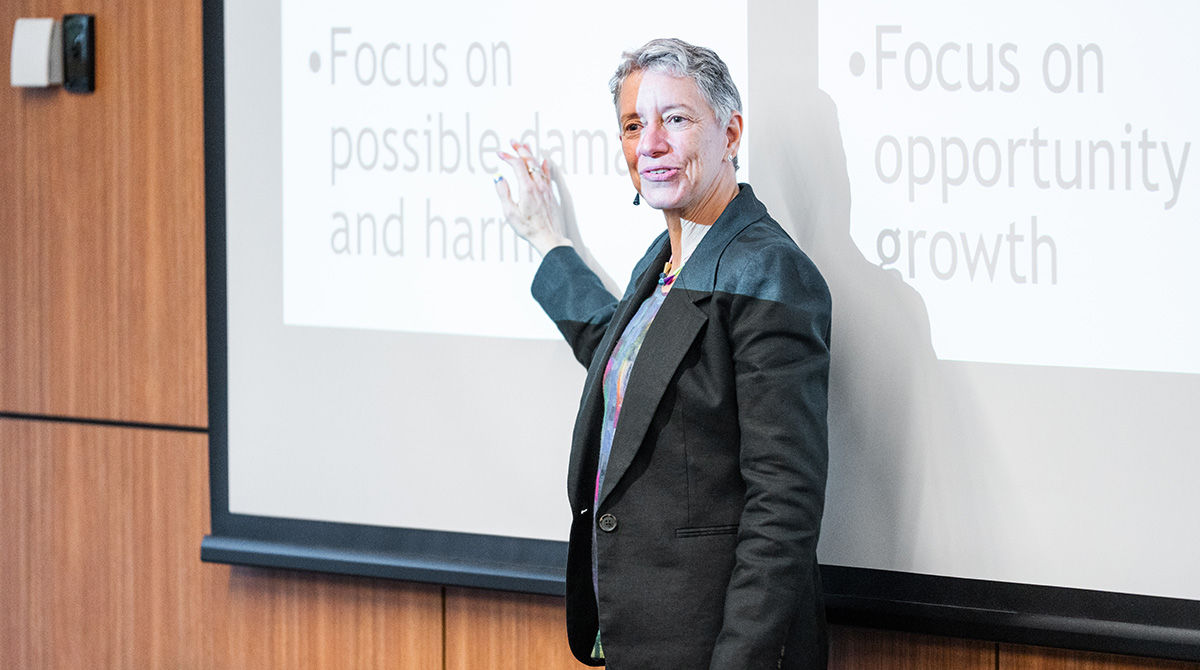
Staying up late or skipping a workout to squeeze in some extra study might feel like a good idea, but it could do more harm than good.
Professor Jill Klein says when it comes to peak performance, sleep, nutrition and exercise are key to learning.
“If you don't get adequate sleep, physical activity and nutrition, it’s going to have a negative impact on your ability to develop long-term memories. And these memories comprise learning,” Professor Klein said.
Professor Klein shares science-backed strategies to optimise learning and build knowledge that will last long after you’ve completed your MBA.
Handwrite your notes
When it comes to forming memory, the research shows handwriting notes is better for your memory than typing them.
While it’s tempting to type during class because it’s quicker, Professor Klein says studies suggest that people who handwrite their notes perform better on tests compared to those who type them.
“If you write your notes first and then type them later, that is even better for your memory,” Professor Klein said.
Use it or lose it
Our brains form memories by creating connections between neurons.
“The brain is made up of trillions of neurons that communicate with one another through neural networks.
“As you're learning, you develop new connections between neurons,” Professor Klein said.
But these connections are fragile at first, like threads of silk.
If you never think about something again, you will lose those connections. The brain is very efficient. If you're not using something, you lose it.
“This is why you want to think about something again and again, go back through your materials and what was said in class or a meeting,” Professor Klein said.
“It’s also a great idea to share what you learned with others. Every repetition solidifies the initially fragile connections between brain cells.
Focus your attention
Professor Klein explains that to retain information, things need to move from our working memory through to our long-term memory.
Most of what we experience won’t arrive in our long-term memory because a “bottleneck" occurs as memories try to make this transition.
This is because our working memory, has such a small capacity.
“No matter how sharp we are, we all have this bottleneck, which is that you can only have about three to five things on your mental plate at one time,” Professor Klein said.
“If you are trying to keep in mind several facts or ideas, and you are interrupted with a new piece of information (such as an incoming text), something will fall out of working memory and possibly never get into long-term memory.”
Therefore, focus really matters.
“The research is clear, what matters most about whether you're going to remember something one month from now is what happens in the first few seconds. So, if you're distracted, you're less likely to remember it,” Professor Klein said.
The best teachers also use the power of storytelling to facilitate focus and make learning more memorable.
“I always tell stories as part of my teaching because, and connect these real-life examples to the conceptual information I want students to learn.
This will help boost their memory. Plus, stories make both teaching and learning a lot more fun.”
Multitasking is a myth
The research shows that when we try and multitask, it slows us down, we don’t remember things and we have reduced cognitive capacity.
“We could do a cognitive task and a procedural task, but we cannot multitask by doing two cognitive tasks at once,” Professor Klein said.
For example, we could ride a bike and problem solve or we could clean our kitchen while thinking about how to resolve a conflict with a colleague. This is because cognitive and procedural tasks rely on different systems in the brain.
She said what we want to do is the opposite of multitasking for two cognitive tasks: we want to focus and then elaborate upon new knowledge by connecting it to something you already know.
An example of elaboration is you recently had to give feedback to a colleague, and you are not sure how well it went or if your message got through.
“When you are learning about feedback techniques in class, you can connect this new information to your own experience, thinking about how what you did compares to what you are learning and if you want to try something new next time.”
This goes back to the concept of ‘use it or lose it’.
“If you connect something new that you learned to a network that's already there, then you have multiple ways to get to it later,” Professor Klein said.
The importance of vitality
In sleep, we consolidate memory, and this can enhance memory 20 to 40 percent, according to Professor Klein.
She says we should be aiming for seven to nine hours of good quality sleep each night.
Sleep is just one of the three core components to vitality, the energy we bring to our work and our life.
The others are physical activity and nutrition.
“All of these affect our physical, cognitive, and emotional health – and our ability to learn,” Professor Klein said.
"Any movement is better than staying still, but a combination of both cardio and strength building is ideal.”
When it comes to nutrients, Professor Klein recommends steering clear of sugary snacks, as big fluctuations in insulin aren’t good.
Focus instead on omega 3 and vitamin b9. These support a protein in the brain - brain-derived neurotrophic factor (BDNF)-that acts as a fertilizer, increasing neural connections and building new neurons.
Overall, Professor Klein advocates for a well-balanced life and to enjoy this time of your life, without over burdening yourself with worries that you need to be studying all the time.
“I encourage you to still really live these months while you are at MBS, and make sure that you have as many good experiences as you can because this is time you can only live once.”
Jill teaches Managerial Judgement, Decision Making and Resilient Leadership on the MBA, Executive and Senior Executive MBA programs, Advanced Management Program, Bastas Academy for Healthcare Leadership, and a variety of executive education programs.
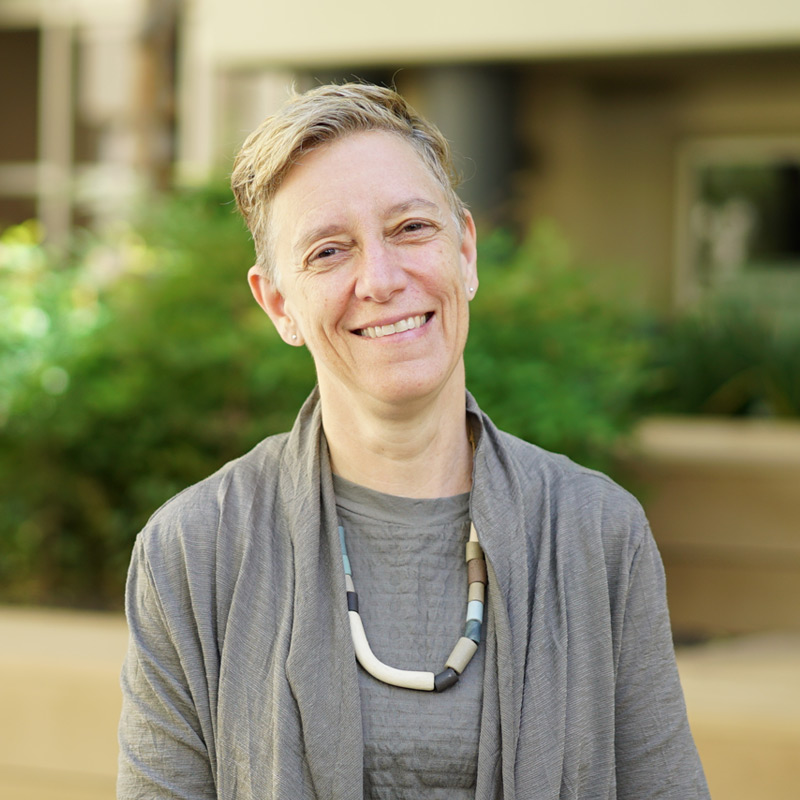
Jill Klein
Professor of Marketing

Part-time MBA
Management
Part-time MBA
A flexible, top-ranked MBA with study options that make it easier than ever to get started.
Scholarships
A range of scholarships that encourage diversity, provide opportunity and reward talent.

