Leading Through Complexity in Health
Strategic acumen for adaptive leadership.
Leading Through Complexity in Health Course Overview
Strengthen your adaptive leadership skills to enhance performance in changing and uncertain times, taking a systems level view of the Australian healthcare ecosystem.
Who Should Attend Leading Through Complexity in Health?
Mid-Level and Business Unit Leaders
- Professionals seeking the strategic and adaptive skills necessary to lead high-stakes operational units.
Individuals in Strategic, Advising or Decision-Making Roles
- Those responsible for organisational strategy, change management, systems improvement, or internal consulting within health systems, government, or private sector health organisations.
Performance Catalysts
- Leaders committed to mastering systems thinking, adaptive leadership, and best practices in change management to leverage organisational performance in highly regulated environments.
Leading Through Complexity in Health Key Takeaways
Ability to Apply Principles of Systems Thinking and Adaptive Leadership
- Analyse and apply principles of systems thinking and adaptive leadership to navigate complex organisational contexts in healthcare, including the ability to diagnose technical and adaptive challenges and create leverage for amplified impact.
Understand the Macro Environment Impacting Healthcare Systems
- Explore the macro environment impacting healthcare systems, workforce challenges, and sustainability requirements, to inform strategic decision-making and organisational adaptation.
Learn how to Explore and Reconcile Diverse Beliefs, Assumptions, and Motivations
- Learn how to explore and reconcile diverse beliefs, assumptions, and motivations that reinforce the current state. Apply approaches to experiment and facilitate emergence within and across systems to enact positive change.
Foster Collaboration and Mutual Awareness
- Foster collaboration and mutual awareness among private, public, and startup health sectors to drive lasting change and cultivate healthy organisational cultures, while applying strategic thinking to address complex challenges in the healthcare landscape.
Demonstrate Leadership in Complex Environments
- Demonstrate leadership in complex environments through case studies and an action learning project.
Leading Through Complexity in Health Topics Covered

Working within and across complex governance structures and organisational silos to create great value and improved care processes.

Understanding and managing the complexities and interconnectedness of organisational structures and cultures in healthcare and related fields.

Adaptive leadership through uncertain times within organisational and operational constraints.

Problem formulation and structured problem-solving.

Leveraging impact, identifying and creating leverage points to drive meaningful change.
Upcoming Sessions
This is a residential program in which participants stay on campus and engage in workshop activities after hours. The program fee covers tuition, meals and accommodation.
Read our full Terms and Conditions and other Frequently Asked Questions for more information.
Dates for 2027 are being released shortly. To be notified as soon as program dates are released, please enquire here.
Leading Through Complexity in Health Key Facilitators

David Keith
Associate Professor, Melbourne Business School
David Keith joined Melbourne Business School in 2023 as an Academic Director for MBA Programs, Associate Professor of Innovation and Sustainability, and Research Director of the MBS Sustainable Value Creation Institute. After completing his PhD in Engineering at the Massachusetts Institute of Technology, David joined the faculty at the MIT Sloan School of Management in the System Dynamics group.
David specialises in using stimulation for strategy development in complex and dynamic settings, with a particular interest in the future of the automotive industry and the impact of new technologies on energy and sustainability. He has published in leading journals including Organisation Science, Production and Operations Management, Journal of Operations Management, and Nature Sustainability, addressing topics including: technology diffusion, new product launch, platform competition, the sharing economy, supply constraints and waitlists, and the impact of new technologies on energy consumption and the environment.
David teaches Business Strategy, Corporate Strategy, and Sustainability in the MBA and Executive MBA programs, along with a variety of executive education programs with leading corporations and public sector organisations. He has published widely and is a recipient of a Fulbright Scholarship and American-Australian Association – Alcoa Foundation Fellowship
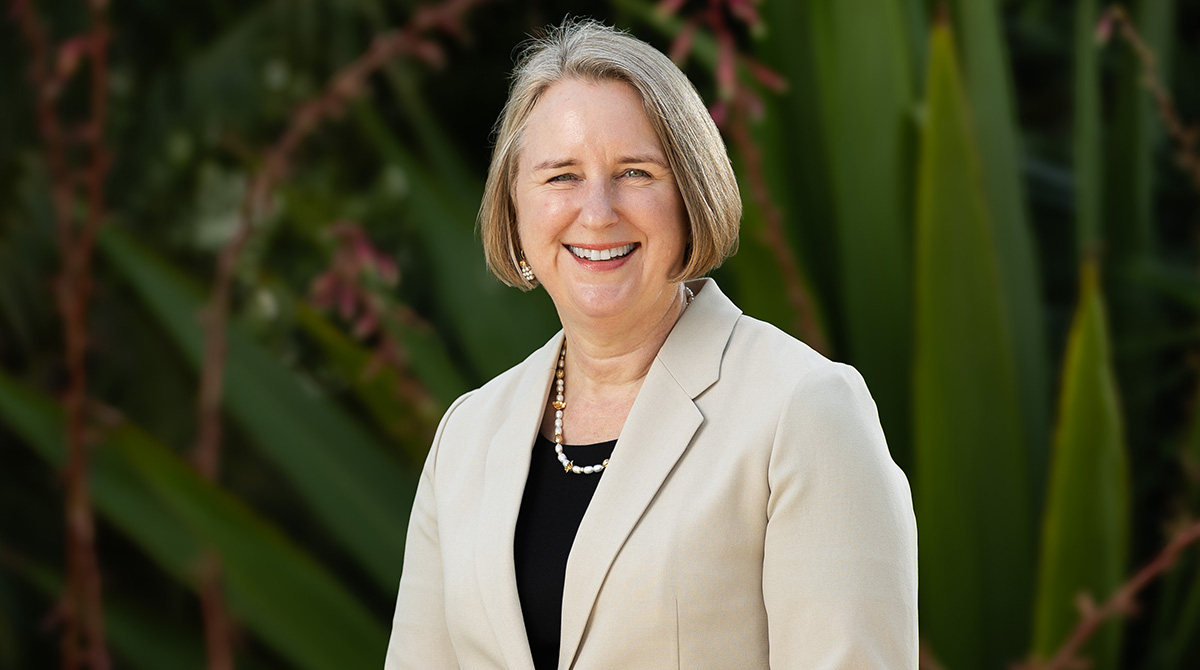
Jodie McVernon, AO
Professor and Director of Doherty Epidemiology, Peter Doherty Institute for Infection and Immunity
Acting Deputy Dean Partnerships, Faculty of Medicine, Dentistry and Health Sciences, University of Melbourne
Jodie is a public health physician and epidemiologist with over 20 years’ experience across vaccine trials, infectious diseases modelling and health policy. She is Professor and Director of Doherty Epidemiology at the Peter Doherty Institute for Infection and Immunity, and Acting Deputy Dean Partnerships in the Faculty of Medicine, Dentistry and Health Sciences at the University of Melbourne.
Her work focuses on building capability in infectious disease modelling across Australia and the Asia-Pacific region to inform immunisation and pandemic preparedness policy. Through broad collaborations with academia, government, industry and non-profits, she advances translational research and fosters cross-sector engagement.
Jodie leads multidisciplinary teams using mathematical and computational models to inform complex policy decisions involving multiple objectives and trade-offs. She has coordinated national and international modelling responses to H1N1 influenza and COVID-19, and promotes a ‘One Health’ approach recognising the interconnectedness of human, animal and environmental health.
Related Programs and Courses

Activating Your Health Leadership
Activating Your Health Leadership
Confident leadership for complex healthcare.

Health Leadership for Impact
Health Leadership for Impact
Influence, align, and thrive in healthcare complexity.

Leading Cultures of Innovation and Impact
Leading Cultures of Innovation and Impact
Idea to impact: Leading a culture of innovation in the health sector.


Bastas Academy for Health Leadership Scholarships
We are committed to supporting bright and ambitious leaders to take part in Bastas Academy for Health Leadership courses.
Thanks to a generous gift from Dennis Bastas and the support of DBG Health, scholarships of up to 75% of course fees are available for successful applicants.
These scholarships aim to foster diversity, improve access and opportunity, and recognise talent across the Australian health sector. Preference is given to under-represented groups who may face barriers to accessing formal learning.
Please note: Scholarships are not available to employees of DBG Health or affiliated companies.
Scholarship Eligibility Criteria
To be eligible you must:
- Be currently employed in the Australian health sector
- Be an Australian citizen or Permanent Resident
- Intend to complete a Bastas Academy for Health Leadership course and apply your learning to improve the health sector
- Commit to enrolling in and completing the course
*Subject to the scholarship application process.
How to Apply
Scholarships are applied for as part of the course application process.
To be considered:
- 1. Click the “Apply” button next to your chosen course.
- 2. Complete the application form.
- 3. When prompted, select “Yes” to indicate that you would like to be considered for a scholarship.
There is no separate scholarship application form.
Key Dates
- Scholarship applications are now open.
- Applications close four weeks prior to the course start date..